
Can Your Cafe Use Invoice Finance?
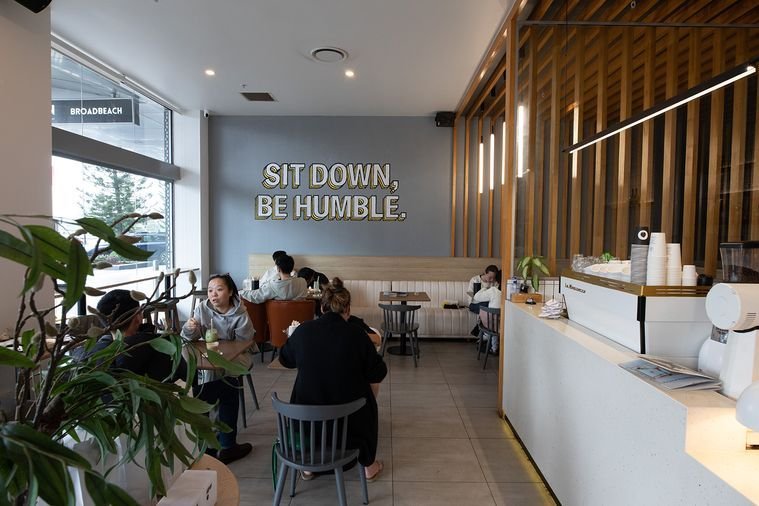
Cafe invoice finance eligibility thresholds for Australian cafe owners – Switchboard Finance
 Café Hub
Invoice Finance · B2B Revenue · Eligibility Thresholds
Can Your Cafe Use Invoice Finance?
Most cafe revenue crosses the counter as retail sales — and invoice finance cannot touch retail. The facility only works on business-to-business invoices with payment terms. This decision tree maps the five structural thresholds that separate a pass from a fail.
Quick Answer
Most cafes cannot use invoice finance because the majority of their revenue is retail point-of-sale, not invoiced B2B trade. Cafes that run wholesale supply, corporate catering or office coffee accounts may qualify — but only if their B2B ledger meets minimum thresholds for debtor count, invoice size, payment tenor and concentration spread.
What Invoice Finance Actually Requires
Invoice finance advances cash against unpaid B2B invoices. A funder purchases your receivables ledger (or selected invoices) at a discount and releases the majority of the face value within 24–48 hours. The balance, minus fees, settles when your debtor pays.
The critical word is invoices. A valid tax invoice must exist — issued by your cafe to another registered business, with agreed payment terms (typically 14–60 days). The ATO's tax invoice guidance sets out the minimum requirements: your ABN, the buyer's identity, description of the supply, GST amount, and the date of issue. If your cafe's revenue flows through EFTPOS terminals and counter sales, there is no invoice ledger to finance against — and the facility cannot be established.
This is why invoice finance suits cafes with a wholesale or catering arm rather than pure-retail venues. For the broader case on when cafes actually use this facility, see the wholesale and catering invoice finance post.
Five-Gate Eligibility Decision Tree
Work through these five gates in order. If your cafe fails any single gate, invoice finance is not the right facility — a business line of credit or working capital loan is likely the better path. Each gate represents a structural requirement, not a preference.
Does your cafe issue B2B invoices with payment terms?
You need a recurring ledger of invoices sent to other businesses — wholesale orders to retailers, corporate catering contracts, office coffee supply agreements. Counter sales, UberEats, and DoorDash revenue do not count. If the answer is no, the remaining gates are irrelevant.
Is your B2B revenue at least 30% of total turnover?
Funders assess whether the invoiced portion of your business is large enough to justify a facility. Below approximately 30% B2B share, the administrative overhead of managing a small receivables pool typically exceeds the benefit. The exact threshold varies by funder, but this is the floor most use as a screening filter.
Do you have at least 3 active B2B debtors?
A single debtor creates unacceptable concentration risk — if that debtor defaults or disputes, the entire facility is exposed. Funders want to see at least three distinct businesses on your ledger, with no single debtor representing more than approximately 40% of the total receivables pool. Two debtors at 50/50 is also problematic.
Are your average invoice payment terms between 14 and 60 days?
Invoice finance advances cash during the gap between issuing an invoice and receiving payment. If your debtors pay within 7 days (common in small-lot wholesale), the cost of the facility may exceed the benefit. If terms stretch beyond 90 days, funders see collection risk. The sweet spot for cafe B2B invoices is 14–60 days.
Is your debtor ledger older than 6 months with clean payment history?
Funders want to see an established trading relationship — not a brand-new wholesale contract that might not survive its first quarter. Six months of consistent invoicing with no material disputes or write-offs demonstrates the ledger is bankable. Newer ledgers may qualify with a larger debtor pool or stronger ABN history.
If your cafe clears all five gates, invoice finance is structurally viable. The next step is a cashflow conversation with a broker who can match your ledger profile to the right funder — disclosed or confidential, full-ledger or selective. Check your eligibility to start that conversation.
Cafe Profiles That Pass vs Fail
The decision tree above reads cleanly in theory. In practice, most cafes sit somewhere between a clear pass and a clear fail. These profiles show how the same facility type reads differently depending on the revenue structure behind the ABN.
Passes
- Cafe with wholesale arm supplying 8 retailers, 45-day terms, 6+ invoices per month
- Corporate catering business operating under a cafe ABN, 5 regular clients on 30-day terms
- Office coffee subscription with 12 business accounts billed monthly
- Multi-venue operator supplying own venues plus 4 external cafes from a central kitchen
Fails
- Single-venue cafe with 95% retail counter sales and no B2B invoicing
- Cafe with one large corporate catering client representing 80% of B2B revenue
- Wholesale arm with 7-day payment terms — gap too short to justify facility cost
- New wholesale contracts less than 3 months old with no payment history
If your cafe falls on the "fails" side, that does not mean you cannot access working capital. It means invoice finance is the wrong tool. A line of credit secured against trading history, or an unsecured business loan based on merchant settlement data, may bridge the same cashflow gap without requiring a B2B ledger. See the LOC vs working capital comparison for how those alternatives stack up.
Disclosed vs Confidential: Which Matters for Cafes
Invoice finance comes in two forms and the choice affects your debtor relationships directly. Under a disclosed facility, your debtors are notified that their invoices have been assigned to a funder — they pay the funder, not you. Under a confidential facility, your debtors never know the facility exists — they continue paying you, and the funder is repaid from your operating account.
For cafes with wholesale relationships, confidential is almost always the better fit. Wholesale buyers in hospitality are sensitive to supplier stability signals. A notification that your invoices have been "assigned" can spook a buyer into looking for an alternative supplier, even if the arrangement is entirely normal. Confidential facilities cost marginally more (the funder carries more risk) but preserve your commercial relationships.
The facility cost — typically a discount margin plus a service fee — needs to be weighed against the cashflow benefit. For cafes with seasonal wholesale peaks (event season, Christmas corporate orders), the maths often works during high-volume months and is less compelling during quieter trading periods. A selective facility lets you choose which invoices to finance rather than committing the full ledger.
When the Answer Is No — and What to Use Instead
Most cafes that enquire about invoice finance do not qualify because their revenue structure is overwhelmingly retail. That is not a shortcoming — it is a structural reality of the hospitality model. The Café Hub maps the full range of facilities available to cafe owners regardless of revenue structure.
If your cafe fails the decision tree at Gate 1 (no B2B invoices), the right conversation shifts to merchant-data-backed facilities. Non-bank lenders can assess your EFTPOS settlement history — daily takings, transaction volume, seasonal patterns — and establish a working capital facility or business loan against that data. No invoices required. The approval reads your trading history, not your debtor book.
For cafes that fail at Gate 2 or Gate 3 (too little B2B or too few debtors), a hybrid approach sometimes works: invoice finance on the B2B portion paired with a line of credit on the retail side. Your broker structures these as complementary facilities, each secured against the revenue stream it services. The GST turnover figure on your BAS is the starting point for both conversations.
Invoice finance is a powerful tool for the right cafe — but "the right cafe" is narrower than most owners expect. You need a genuine B2B invoicing arm generating at least 30% of turnover, three or more active debtors, 14–60 day payment terms, and a clean ledger history of six months or more. If that describes your operation, the facility can transform debtor days into same-week working capital. If it doesn't, merchant-data facilities and lines of credit are the better path.
Key takeaway: Run your cafe through the five-gate decision tree before enquiring — it saves time and points you to the facility that actually fits your revenue structure.Frequently Asked Questions
There is no universal minimum, but most funders require a B2B invoicing volume that represents at least 30% of your total annual turnover, with a minimum of three active debtors on the ledger. In practice, this means a cafe needs a genuine wholesale, catering or corporate accounts arm — not occasional one-off B2B sales. The ledger also needs at least six months of consistent trading history for funders to assess payment patterns and debtor reliability.
No. Delivery platform revenue is not invoiced B2B trade — it flows as aggregated merchant settlements from the platform to your bank account. There is no individual tax invoice issued by your cafe to a debtor with payment terms. Invoice finance requires a debtor that owes you money against a specific invoice, not a platform that batches consumer transactions. For cashflow support on platform-heavy revenue, a business line of credit based on your total merchant settlement data is the appropriate facility.
Debtor concentration measures what percentage of your total receivables sits with a single debtor. If one client owes you 60% of your outstanding invoices, the funder's exposure is heavily concentrated — a default by that one debtor could collapse the facility. Most funders cap single-debtor concentration at approximately 40% of the total ledger. For cafes, this means diversifying your wholesale or catering base across multiple buyers rather than relying on one large corporate account. See the Café Hub for broader funding structures that reduce reliance on any single revenue stream.
It depends on your usage pattern and ledger size. Invoice finance is typically priced as a discount margin (the advance fee per invoice, often expressed as a percentage of face value) plus a service fee. A business line of credit charges interest only on the drawn balance. For cafes with consistent monthly invoicing above approximately $15,000 in B2B trade, invoice finance can be comparable or cheaper on an effective annual rate basis because you are only financing specific invoices for specific periods. For cafes with smaller or irregular B2B volumes, a line of credit is simpler and often more cost-effective. Your broker should model both scenarios against your actual BAS figures before committing.
Yes — and for cafes with mixed revenue streams, this is often the optimal structure. Invoice finance covers your B2B receivables, a working capital loan or line of credit covers retail-side cashflow needs, and asset-specific facilities like equipment finance handle machinery purchases. The key is sequencing: your broker ensures each facility is secured against its own revenue stream so they don't cross-collateralise or compete for the same security. The cafe loan pack is designed to bundle these facilities into a coordinated structure.

 FBAA Accredited
