
Buy or Lease Your Factory in 2026: Two Owner-Occupier Paths
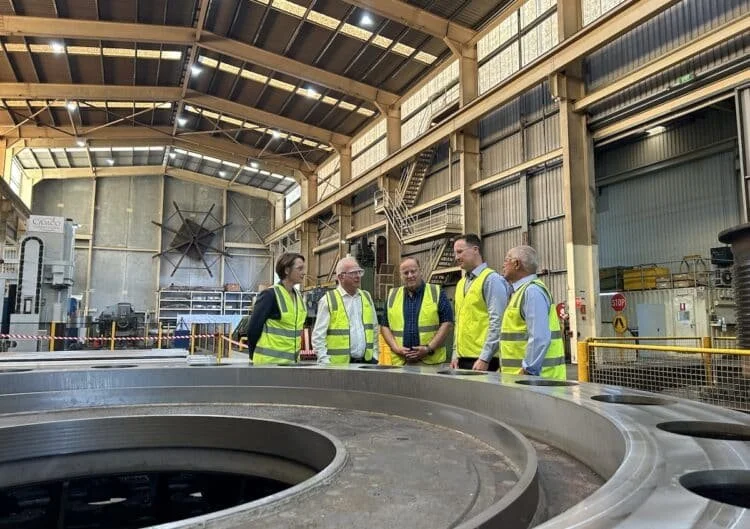
Owner-occupier commercial property loan for manufacturers buying their factory: Switchboard Finance
 Manufacturing Hub
Owner-Occupier · Factory Purchase · Trust Structure
Buy or Lease Your Factory in 2026: Two Owner-Occupier Paths
Budget 2026-27 has changed the math on owning the factory. Permanent IAWO, a 30% trust minimum tax landing in 2028, and a valuation-based CGT split at 1 July 2027 mean the lease-versus-buy decision now has to be made with the post-Budget timing pivot in view.
Quick Answer
For most established manufacturers, buying the factory through an owner-occupier commercial property loan captures rent, depreciation and any future capital growth that a lease leaves on the table. Budget 2026-27 sharpens the timing: the trust structure decision now has a 1 July 2028 overlay, and assets held across 1 July 2027 face a valuation-based CGT pivot.
When buying the factory beats leasing it
Buying the factory and leasing the factory are not interchangeable outcomes, they are different financial structures with different tax, balance-sheet and timing consequences. Lease payments leave the business each month as a deductible expense. Mortgage payments leave the business too, but the principal component builds equity inside the owner's broader stack, and the property itself becomes a security asset that the operator can later refinance, develop or release equity from. For a manufacturer with stable orders, repeat customers and a site that suits the operation for the medium term, the post-budget owner-occupier math typically lands in favour of buying.
The cases where leasing still wins are not about hesitation, they are about fit. If the operation is growing fast enough that the current site will be the wrong size inside three years, or if the manufacturer needs cash on the balance sheet for working capital rather than tied up in a 20 to 25% deposit, leasing preserves optionality that ownership locks away. Where this commonly lands for the manufacturers we work with: buy where the site, the equipment and the workforce are stable; lease where any of those three are about to change.
The owner-occupier commercial property loan, structurally
An owner-occupier commercial property loan is not a residential mortgage with a different label. It is its own product class, underwritten differently, priced differently and structured differently to investment-grade commercial debt. The lender is reading the trading entity that occupies the building, not just the property valuation. That means the file shape sits much closer to a business loan than a home loan, even though the security is bricks.
Indicative shape, varies by lender and security: LVR of 65 to 75% against the property valuation, sometimes higher on bank security plus director guarantee. Term typically 15 to 25 years, with interest-only periods available in early years. Rates indicative, varies by lender and risk grade. Where this commonly lands for a Manufacturer: a single facility against the factory, with the trading entity as either borrower or related-entity lessee depending on structure.
For deeper context on the structural read for Manufacturers specifically, the existing owner-occupier guide for Manufacturers walks through the lender-view test case for occupier rent versus open-market rent. The Federal Government's business.gov.au provides general guidance on owning versus leasing business premises that a Manufacturer should pair with broker advice before settling on the structure.
Trading entity to property trust, the structural baseline
The most common structure we see for a Manufacturer buying their factory is: trading pty ltd remains the operating company, a separate property entity (typically a discretionary trust with a corporate trustee) holds the property as security, and the trading entity leases the property back under a related-party arm's length lease at market rent. This separates property risk from trading risk, simplifies a future sale of the business and gives the property entity standalone bankability.
Trust tax and CGT overlays after Budget 2026-27
Budget 2026-27 has added two important overlays to the trading-entity-and-property-trust pattern. The first is the 30% trust minimum tax legislated for 1 July 2028 if enacted, payable by the trustee on taxable income of discretionary trusts. Non-corporate beneficiaries receive non-refundable credits for the tax. Corporate beneficiaries do not, which removes a common bucket-company strategy. The second overlay is the split CGT treatment for assets held across 1 July 2027 (if enacted): gains accrued up to 1 July 2027 retain the 50% discount, gains arising from 1 July 2027 onwards apply cost-base indexation plus 30% minimum tax, with the asset's value at 1 July 2027 forming the cost base for the new regime, per Budget 2026-27 and Baker McKenzie's Budget Bites 12 May 2026.
That valuation step is the operational implication for any Manufacturer holding the factory across the transition. A 30 June 2027 valuation, commissioned at the time, becomes the evidence base for the pre-transition gain calculation. Without it, the position is harder to defend on disposal. The 2026-27 Federal Budget also opens a rollover relief window 1 July 2027 to 30 June 2030 for restructure, meaning a property held in a discretionary trust can be moved out of that structure inside the window without triggering CGT, if the entity is restructured by the deadline.
Capital works depreciation, IAWO and loss carry-back: where they fit
For a factory purchase, the depreciation regime is capital works depreciation deduction (Division 43 territory, varies by asset class and construction date), not the instant asset write-off. The IAWO applies to plant, equipment and vehicles, not commercial real estate. In the 2026-27 Federal Budget, delivered 12 May 2026, the $20,000 IAWO was made permanent for small businesses with aggregated turnover up to $10 million from 1 July 2026, which removes the year-end cliff that used to drive equipment-purchase panic in May and June. The 30 June 2026 install-by deadline still matters for the current 2025-26 income year deduction, but the structural pressure is off.
The more interesting Budget measure for a Manufacturer planning a factory acquisition is the reintroduced loss carry-back from the 2026-27 income year for eligible companies with aggregated turnover less than $1 billion, Budget 2026-27 estimates up to 85,000 companies will benefit mostly small businesses, revenue losses only and limited by franking account balance. For a cyclical Manufacturer in a capex-heavy acquisition year, that means a revenue loss in the year of factory purchase can recover company tax paid in the prior two profitable years as cash. It changes the math on acquisition timing where the buying year is also likely to be the loss year.
The post-Budget timing decision tree
Putting the Budget overlays together with a Manufacturer's operational realities, the decision narrows to a handful of timing questions. Is the lease about to roll, or is there room to plan? Will the property be held in the trading entity or a separate property trust? Will the property be held across 1 July 2027 or sold before? And does the operating company expect a loss in 2026-27 that could activate the carry-back?
For most Manufacturers buying for long-term occupancy, the answer set looks like: separate property trust, hold across 1 July 2027, commission a 30 June 2027 valuation, and use the rollover relief window 1 July 2027 to 30 June 2030 for restructure as a planning backstop rather than a forcing function. If the property is going to be held for less than 5 years or sold inside the transition window, the structure conversation needs to happen with the accountant before contract, not after. For Manufacturers already sitting in a discretionary trust, the EOFY 2026 conversation is whether to use the upcoming rollover window or accept the trust tax overlay on retained income from 1 July 2028.
None of this changes the lender file shape on the day. What it changes is which entity signs the loan and which entity holds the asset, and that decision is the one most worth getting right before the offer goes in. For the broader sequencing of property finance moves around EOFY, the EOFY property finance sequencing guide covers how the stack lines up across the cluster.
Buying the factory remains the right call for most Manufacturers with stable operations and a site that fits. Budget 2026-27 has not changed that conclusion, but it has changed the structuring sequence around it. The trust route, which used to be the default for separating property from trading risk, now carries the 1 July 2028 trust tax overlay. The CGT shape across 1 July 2027 means a 30 June 2027 valuation is now an operational item, not an optional one. And the loss carry-back gives capex-heavy years a recovery mechanism they did not have under the prior settings.
Key takeaway: Decide the entity that holds the factory before the offer, not after, and book a 30 June 2027 valuation if you are holding across the CGT pivot.Frequently Asked Questions
Whether it is better to buy or lease commercial property in Australia depends on whether the operator values long-term ownership economics and balance-sheet equity over the operational flexibility a lease preserves. For an established Manufacturer with steady cashflow, buying the factory through an owner-occupier commercial property loan typically captures the rent that would otherwise leave the business, plus capital works depreciation deduction (Division 43 territory, varies by asset class and construction date) and any future capital growth.
Leasing is the cleaner answer where the site, the size of the operation or the equipment fit-out is likely to change inside the loan term.
Yes, your trading company can buy the factory directly, but most accountants in the manufacturing space recommend separating the trading entity from the property entity. Owning the factory inside the trading pty ltd ties the property to the trading entity's litigation, supplier and tax risk, and complicates any future restructure.
The cleaner pattern is a property trust or separate property entity that leases the factory back to the trading entity under a related-party arm's length lease at market rent.
For trust structures holding commercial property after Budget 2026-27, the headline change is the 30% trust minimum tax legislated for 1 July 2028 if enacted, payable by the trustee on the taxable income of discretionary trusts. Non-corporate beneficiaries receive non-refundable credits for the tax, but corporate beneficiaries do not, which removes a common bucket-company strategy.
The 2026-27 Federal Budget also opens a three-year rollover relief window from 1 July 2027 to 30 June 2030 for restructuring out of discretionary trusts. Fixed trusts, widely-held trusts, super funds and certain other vehicles are excluded from the new trust tax.
For a factory you already own, the 50% CGT discount replacement only applies to gains arising from 1 July 2027 onwards, so the split CGT treatment for assets held across 1 July 2027 (if enacted) preserves the 50% discount on gains accrued up to that date. The new regime applies cost-base indexation plus a 30% minimum tax on the post-transition portion, with the asset's value at 1 July 2027 forming the cost base for the new regime, per Budget 2026-27 and Baker McKenzie's Budget Bites 12 May 2026.
The operational implication for owners holding the factory across the transition is to commission a 30 June 2027 valuation so the pre-transition gain can be calculated cleanly. For a structural overview of how this lands across the broader property stack, the EOFY property finance sequencing guide covers the cluster context.
The deadline for the 30 June 2026 instant asset write-off is the date the eligible asset is installed and ready for use, not the date the contract is signed, and Budget 2026-27 confirmed the $20,000 threshold continues for the 2025-26 income year before becoming permanent for small business from 1 July 2026. The IAWO applies to plant, equipment and vehicles, not commercial real estate.
For factory purchases in the same window, the property itself sits in Division 43 capital works territory, not the IAWO regime. The two regimes can apply alongside each other in the same year for the same Manufacturer.

 FBAA Accredited
