
Owner-Occupier Commercial Property Loans for Manufacturers (2026)
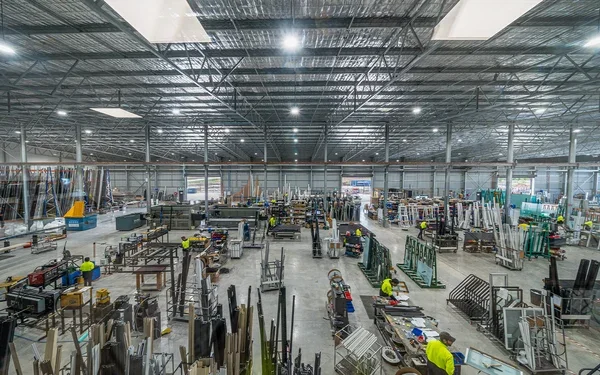
Owner occupier commercial property loan manufacturer – Switchboard Finance
 Manufacturing Hub
Industrial Zoning · LVR · Fit-Out Valuation · Factory Finance
Owner-Occupier Commercial Property Loans for Manufacturers (2026)
Industrial property is not commercial property. Lenders price them differently. Zoning classification, bolted-down plant, and specialised fit-outs all compress LVR and change the credit assessment — and most manufacturers discover this after the valuation comes back lower than expected.
Quick Answer
Manufacturers can access owner-occupier commercial property loans for factory premises, but lenders assess industrial sites on zoning, fit-out specificity, and forced-sale value rather than standard commercial metrics. The more specialised the site, the tighter the terms — understanding what lenders actually look at before you apply saves weeks of rework and rejected valuations.
Industrial Zoning Is Not Generic Commercial — Lenders Know the Difference
Lenders split commercial property into categories, and industrial sits in its own risk bucket. A factory zoned IN1 (General Industrial) or IN2 (Light Industrial) under state planning frameworks carries a different risk profile to a retail shopfront or office suite. The valuer's assessment starts with what the zoning permits, not what you're doing in the building — and this drives the loan-to-value ratio the lender will offer.
For manufacturers, the distinction matters because industrial zoning typically means a smaller buyer pool at resale. A warehouse in a mixed-use precinct can be repurposed as a gym, logistics hub, or studio space. A factory zoned IN1 with three-phase power, extraction systems, and a gantry crane bolted to the floor has a narrower field of potential buyers — and lenders price that illiquidity into their terms. According to business.gov.au's guidance on commercial premises, understanding zoning classifications before committing to a purchase protects businesses from planning restrictions that can limit future use or sale.
This doesn't mean manufacturer-occupied industrial property is hard to finance. It means the application needs to address the lender's specific concerns upfront. A broker who understands manufacturing finance will frame the submission around the property's characteristics, not just the borrower's financials.
How Lenders Value a Factory with Bolted-Down Plant
The valuation is where most manufacturer property loan applications run into trouble. A standard commercial valuation assesses the land and building shell. But in a manufacturing facility, the line between "building" and "plant" blurs — extraction ducting, compressed air lines, reinforced flooring, overhead cranes, and three-phase wiring are physically part of the structure but may not add to the lender's assessed value.
Lenders instruct valuers to separate fixture value (improvements that transfer with the property) from chattel value (equipment that can be removed). A CNC machine bolted to a reinforced concrete pad is a chattel — it leaves with you. The reinforced pad itself is a fixture — it stays. But the pad only has value to another buyer who needs a reinforced pad in that exact location. This is why forced-sale valuations on manufacturing properties often come in significantly below what the owner paid.
Assessed on comparable industrial land sales in the same zoning precinct. This is the floor — the minimum security the lender holds.
Standard industrial construction — walls, roof, loading docks, basic electrical. Valued at replacement cost less depreciation.
Three-phase upgrades, extraction systems, reinforced flooring, crane rails. Valued at whatever a generic buyer would pay — often a fraction of install cost.
CNC machines, press brakes, lathes, packaging lines. Excluded from the property valuation entirely — these are financed separately via equipment finance or chattel mortgage.
The practical result: a manufacturer who paid $1.8 million for a factory (including $300,000 in fit-out) may find the lender values the property at $1.4 million for lending purposes. That gap changes everything about the required deposit, the LVR, and the loan structure. The Melbourne manufacturing finance guide covers how to structure the equipment side separately so the property loan stays clean.
Which Industrial Properties Get Stronger Terms
Not all factory premises trigger the same lending response. The properties that attract better LVR, lower rates, and faster approvals share a common trait: they could be re-let or resold to a different business without major modification. The properties that attract tighter terms are the ones built around a single manufacturing process with limited alternative use.
Stronger Fit
- Standard warehouse with office, high clearance, loading dock
- Light industrial unit in a multi-tenanted estate
- Factory with generic fit-out (standard power, no specialised extraction)
- Mixed-use industrial zoning (IN2) with permitted alternative uses
- Metro or inner-ring industrial precinct with strong vacancy data
Gets Tricky
- Purpose-built food manufacturing facility with cold rooms and drainage
- Heavy industrial site with gantry cranes and reinforced flooring throughout
- Regional factory more than 50km from a major city centre
- Chemical or hazardous-material storage classification
- Single-tenant factory with no alternative-use pathway without major refit
The "gets tricky" column doesn't mean unfinanceable — it means the lender applies tighter LVR, may require a higher deposit, or routes the application to a specialist credit team. A broker who understands the split between property-backed and equipment-backed structures can present the deal so the property loan covers only what the lender will value, and the specialist fit-out is handled elsewhere. If your factory falls into the tighter-terms column, check your eligibility before committing to a purchase — knowing your borrowing capacity at the outset prevents settlement risk.
The LVR Compression Problem on Specialised Sites
On a standard owner-occupier commercial property, a manufacturer with clean financials and trading history might expect LVR of 65–70% from a major bank. On a specialised manufacturing site — heavy IN1 zoning, purpose-built fit-out, regional location — that same borrower might be offered 50–55% LVR. The borrower hasn't changed. The property has.
This is LVR compression: the lender reduces their exposure not because of your credit risk, but because of the property's resale risk. If you default and the lender needs to sell, a specialised factory in a thin market may sit unsold for 12–18 months. That carrying cost gets priced into the LVR at the outset.
The workaround is structure. Instead of trying to force a high-LVR loan against a specialised property, a broker can layer the financing: commercial property loan at the LVR the lender is comfortable with, plus a separate facility for the gap — sometimes secured against other assets, sometimes via private lending as a short-term bridge until the business generates enough cashflow to refinance on better terms. The manufacturing loan pack is built around this kind of multi-facility structuring.
Owner-Occupier vs Investment: What Changes in the Credit Assessment
When a manufacturer buys a factory to operate from — rather than to lease to a third party — the lender assesses serviceability against the business's operating cashflow, not rental income. This changes the shape of the application. The lender needs to see that the business generates enough revenue, after all existing debt commitments, to service the new property loan. BAS, profit-and-loss statements, and bank statements carry more weight than a rental appraisal.
The upside of owner-occupier applications for manufacturers is that the lender considers the business's occupancy as more stable than a third-party tenancy. You're not going to give yourself a vacancy notice. This can work in your favour on term length and rate — some lenders offer marginally better pricing for owner-occupiers because the occupancy risk is lower.
The downside is that if the manufacturing business hits a rough patch — a major customer loss, a supply chain disruption, or a capex-heavy year that depresses profit — the lender's serviceability calculation tightens, and refinance options narrow. This is why the exit strategy matters as much as the entry. A factory you own outright with a clear debt profile is a fortress. A factory you're leveraged against at 65% LVR with thin cashflow margins and no alternative security is a liability if the business stalls.
For manufacturers looking at a factory purchase alongside ongoing equipment finance commitments and potential development or expansion finance, the sequencing of each facility matters. Speak to a broker before signing a contract of sale — the order in which applications hit the lender's system can affect what gets approved. See how these structures connect across the manufacturing finance hub.
Manufacturer-occupied industrial property is financeable, but lenders assess it differently from standard commercial. Zoning, fit-out specificity, and forced-sale value drive the LVR and rate — not just the borrower's financials. The more specialised the site, the lower the LVR, and the larger the deposit gap. Structure is the answer: separate what the property lender will value from what needs to be financed via equipment or bridging facilities, and sequence the applications so each one strengthens the next.
Key takeaway: Know what the lender will value before you sign — the gap between purchase price and lending value on a specialised factory determines everything about deposit, structure, and timing.Frequently Asked Questions
Yes, but the two facilities should be structured separately. A commercial property loan secures debt against the building and land at the lender's assessed value. Equipment purchases are better handled through equipment finance or a chattel mortgage, where the machinery itself serves as security. Attempting to bundle both into one property loan increases the property LVR unnecessarily and can trigger tighter terms or a declined application. A broker structures these as parallel facilities — the property loan at comfortable LVR, and the equipment finance against the asset — so neither weakens the other.
Most major lenders do distinguish between zoning categories, though the impact varies by institution. IN2 (Light Industrial) properties tend to attract marginally better terms because they permit a broader range of alternative uses — warehousing, trade supply, service industries — which means a larger pool of potential buyers at resale. IN1 (General Industrial) permits heavier manufacturing activity but limits alternative use, which can compress LVR by 5–10% compared to an equivalent IN2 site. The key driver isn't the zoning label itself but the valuer's assessment of alternative-use potential and the depth of the local buyer market.
LVR on owner-occupier industrial property typically ranges from 55% to 70%, depending on the property's characteristics and the lender's appetite. Standard warehouses with generic fit-out in metro locations sit toward the higher end. Purpose-built factories with specialised plant, regional locations, or single-use layouts sit toward the lower end. The borrower's financials matter — strong trading history and clean bank statements can push LVR toward the top of the lender's range — but the property type sets the ceiling. The commercial property loans page outlines the general parameters, and the manufacturing loan pack covers how to layer facilities when LVR isn't enough on its own.
Some lenders allow fit-out costs to be capitalised into the commercial property loan, but only up to the extent the fit-out adds to the property's assessed value — not the cost of the fit-out itself. A $200,000 three-phase power upgrade and extraction system might add only $80,000 to the lender's valuation because the valuer discounts for specialisation. The gap needs to be funded from equity or via a separate facility. Standard fit-out items like office partitioning, basic electrical, and loading dock improvements hold their value better in the lender's eyes. Manufacturing-specific fit-out — clean rooms, chemical drainage, reinforced flooring — adds less to the assessed value because fewer alternative buyers would use it. See the property-backed factory upgrade guide for structuring options.
The loan remains secured against the property regardless of whether you occupy it. If you relocate and the factory becomes vacant, the lender may reclassify the facility from owner-occupier to investment — which can trigger a loan review, a request for additional security, or a rate adjustment. The exit strategy you present at application matters here. If you can demonstrate a clear pathway — lease to a new tenant, sell the property, or refinance against rental income — the lender is more likely to maintain terms. Vacant industrial property without a tenancy or sale plan is the scenario lenders want to avoid. Plan the exit before you need it.

 FBAA Accredited
