
2026 Café Loan Pack: Sequencing Fitout, Kit, LOC & WC
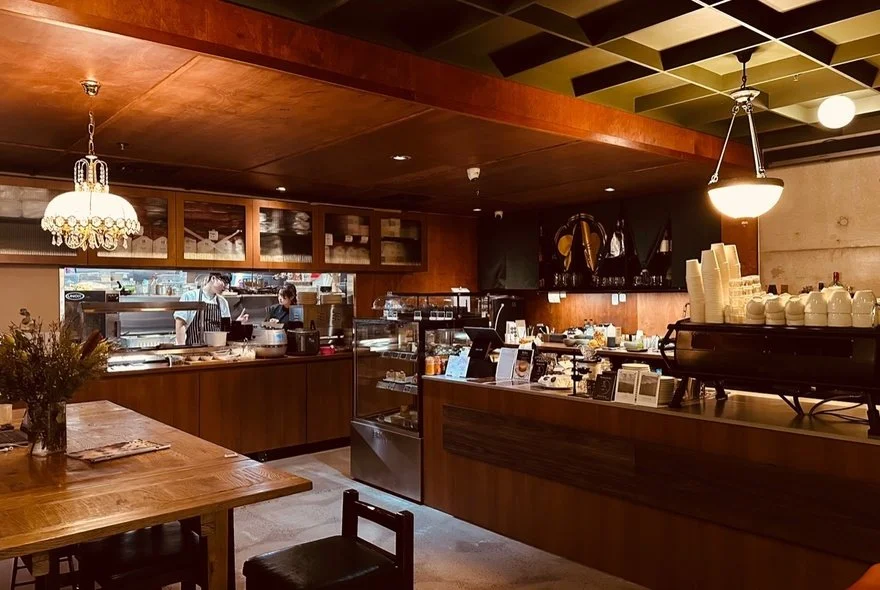
2026 Café Loan Pack sequencing fitout, equipment, line of credit and working capital for Australian café owners – Switchboard Finance
 Café Hub
Café Loan Pack · Fitout → Equipment → LOC → Working Capital · Credit File Sequencing
2026 Café Loan Pack: Sequencing Fitout, Kit, LOC & WC
The RBA cash rate sits at 4.10% after the March lift, Payday Super starts 1 July, and most café owners are still stacking facilities in the wrong order. The right sequence — fitout, equipment, line of credit, working capital — decides which application gets approved and which one blocks the next.
Quick Answer
A café loan pack sequences four facility types — fitout, equipment, line of credit and working capital — in an order that protects credit-file capacity at each step. Fitout and secured equipment go first because they sit against hard assets, the low-doc cashflow facilities go last because they read the credit file after the secured facilities have already landed.
Why the Order Matters More Than Any Single Facility
With the RBA cash rate at 4.10% after the March lift and the next decision due 4–5 May, and Payday Super shifting superannuation guarantee from quarterly to payday from 1 July 2026, café owners are planning larger finance runs into a tighter cashflow window. The instinct is to line up every facility at once and pick the best price. That's how a file stalls.
Every facility a café owner applies for lands on the same credit file. Each approval consumes servicing capacity, each enquiry shows up on the bureau, and lenders assess every new application against the shape of the file they see on the day. Apply for an unsecured working capital loan first, and the secured low-doc asset finance you wanted next month is now reading against a thinner file. The facility itself didn't change. The sequence did. For the underlying LOC-vs-working-capital choice, see café LOC vs working capital loan.
The 2026 Sequence: Fitout → Kit → LOC → Working Capital
The order below is the one that protects servicing capacity through the full build-out. Each step earns its place because the facility type consumes the least capacity relative to what it delivers, and because running each one in this order keeps the file readable to the next lender.
The principle underneath the sequence: secured before unsecured, asset-backed before cashflow-backed, and never let a soft facility land before a hard one if both are in the 90-day window.
What Makes the Pack Faster or Slower Through the Cycle
Two café owners with identical turnover can run this four-facility pack in very different timeframes. The variables aren't the business — they're the file, the paper trail, and whether each application is clean before it lands. Here's what collapses the cycle and what stretches it.
Faster Through the Stack
- Fitout quotes finalised and itemised before step 1 submits
- Equipment list priced per-item, with GST and freight broken out
- BAS up to date across every quarter, no catch-up lodgements pending
- Clean personal credit file, no recent unresolved enquiries
- Business bank statements show consistent turnover month-on-month
- LOC application held back until at least 60–90 days of post-fitout trading
- One broker managing the full stack — no duplicate enquiries across lenders
Slower / Gets Tangled
- Fitout and equipment submitted together at different lenders
- Working capital applied for first because it's "quick" — caps downstream limits
- BAS one or two quarters behind — every lender asks about it
- Multiple credit enquiries already on the bureau in the last 6 months
- Trust deed or entity restructure mid-build — paper trail looks unsettled
- Equipment list bundled as a lump sum with no per-item pricing
- LOC approved at a low limit because it landed during ramp-up, not after
Mid-content note: the café loan pack page walks through the facility types in more detail, and the café hub collects the sequenced scenarios we've written up. If you'd rather map the stack directly, talk to a broker or check eligibility.
How the Rate Window & Payday Super Shape the 2026 Pack
Rate windows matter to sequencing because they change where in the pack price sensitivity bites hardest. The cash rate lift in March 2026 lifted variable pricing across most commercial facilities, but the effect wasn't uniform — secured equipment pricing moved less than unsecured working-capital pricing. That reinforces the ordering argument: the facilities at the top of the stack (fitout, equipment) are the ones least exposed to rate sensitivity, and the ones at the bottom (LOC, working capital) are most exposed. Sequencing the pack front-loads the cheaper-to-hold facilities.
Payday Super overlays a second pressure point on step 3. From 1 July, SG must be paid at each pay run rather than quarterly, which compresses the gap between wage outflow and takings banking. A café that would have been fine with a small overdraft under the quarterly regime is more exposed under the payday regime — which is exactly the gap the line of credit sitting in step 3 is there to cover. Planning the LOC limit against the new weekly SG rhythm — rather than the old quarterly one — is the 2026-specific sequencing call. For the broader multi-venue home-loan overlay, see One Doc Home Loan for multi-venue café owners.
The file that gets through cleanly is the one that treats the four facilities as four applications in a known order, not four applications at once. Sequencing isn't a luxury — it's what keeps each approval from becoming the next one's servicing obstacle.
The 2026 café loan pack sequences fitout → equipment → line of credit → working capital. Secured and asset-backed facilities land first because they read light on the credit file; the revolving and unsecured facilities land last because they read the whole file. The RBA rate window and the 1 July Payday Super shift make the order more, not less, important — the secured top of the stack is least rate-sensitive, and the LOC at step 3 needs to be sized against the new weekly SG rhythm. Applying out of order caps the downstream limits you wanted most.
Key takeaway: Sequence isn't style. Apply out of order and the file that reads clean on paper still loses capacity it never gets back.Frequently Asked Questions
Running low-doc equipment finance and a line of credit in parallel usually caps the LOC limit below what a sequenced application would achieve. Equipment finance is secured against the kit and reads lightly; the LOC reads the full credit file and wants to see trading under the new equipment before it commits to a limit. Submitting them together makes each lender assess against the other's enquiry rather than against the finished file. The faster route is equipment first, trading ramp second, LOC third. See café LOC vs working capital loan for how the LOC sizing logic works.
A clean pack typically spaces each facility by 30–90 days, with the LOC and working-capital facilities held until at least 60–90 days of post-open trading. Fitout and equipment often run within the same four-to-six-week window because both are secured and assessed separately. The revolving and unsecured facilities wait because they need trading data the file doesn't yet have. Compressing the gap between a secured facility and an unsecured one inside 30 days usually means the unsecured lender sees the secured enquiry on the bureau rather than the approved facility — a weaker read. Timing is lender- and file-specific; a broker maps the exact gaps before submission.
Fitout and equipment are usually financed on separate facilities because the security type differs. Fitout sits against the built-in works and trade quotes, equipment sits against each piece of kit as moveable security under equipment finance. Combining them into one facility is possible on some specialist programs but often narrows lender choice and lifts pricing. Running them as sequenced but separate facilities — fitout on step 1, equipment on step 2 — keeps each one priced on its own security profile. See café fitout financing for the fitout-specific view.
The sequence itself doesn't change with the rate cycle, but the cost of getting it wrong does. In a lifting-rate window, the unsecured and revolving facilities at the bottom of the stack are the most rate-exposed — which means applying out of order, and forcing a higher-priced facility earlier than it needs to be, compounds the cost. In a falling-rate window, the penalty for out-of-order applications is smaller but still real on the credit-file side. The RBA decision window matters for pricing, not for structure; structure matters every cycle.
The café loan pack covers the four facility types that repeat across most café finance runs — fitout, equipment, line of credit, and working capital — with guidance on the ABN, BAS and bank-statement evidence each step expects. The café hub sits above it and collects the full set of scenarios — multi-venue, fitout, equipment-specific, cashflow — in one place. The pack is the sequence; the hub is the library behind it.

 FBAA Accredited
