
The 2026 Truckie Loan Pack: Sequencing Truck, Trailer & LOC
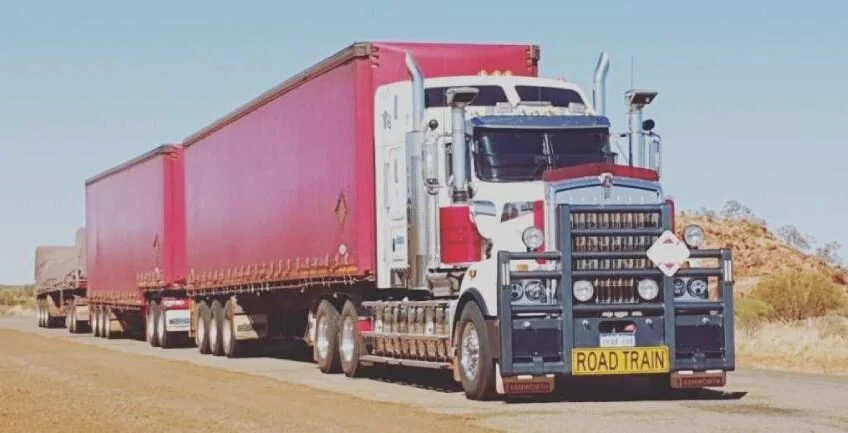
Prime mover and trailer at an Australian transport yard with paperwork in the foreground
 Truckie Hub
TRUCKIE LOAN PACK · SEQUENCING · TRUCK · TRAILER · LOC · 2026
The 2026 Truckie Loan Pack: Sequencing Truck, Trailer & LOC
Heavy prime mover, trailer and rigid registrations fell 9.3% year-on-year in Q1 2026 (ARTSA). Lenders read the same data. The order you apply for truck, trailer and a line of credit now decides whether each approval makes the next one easier — or kills it.
Quick Answer
Sequence the prime mover first, the trailer second, and the line of credit third — never the other way around. Each approval changes how the next lender reads your file, and getting the order wrong stalls the whole pack.
The Truckie Loan Pack is not a single product. It is the way three separate facilities — a truck, a trailer and a working capital line — get stacked across two or three lenders so the operator ends up with the right asset mix and enough cash to keep moving. In 2026, with heavy registrations down and the HVNL reform bringing mandatory Safety Management Systems mid-year, the sequence matters more than it did last year.
This piece is the playbook. It is not a list of products. It is the order, the reasoning, and the single thing that most often stalls the pack.
Why sequence matters in 2026
Lenders look at three things on a heavy commercial file: the existing exposure, the asset being financed, and the cashflow that services it. Each new facility you add changes the picture for the next one. Open a business line of credit first and a truck financier may treat the undrawn limit as a contingent liability. Finance the trailer before the prime mover and you have an asset with no income source in the file.
The sequence below is the one that has worked across most owner-driver and small fleet files in the last twelve months. It is not the only sequence. It is the default.
Step 1 — Prime mover via chattel mortgage
Finance the prime mover first
Use a chattel mortgage on the prime mover. The truck is the income-producing asset. Once it is approved and on the books, every subsequent application has a clean revenue story to attach to. Low-doc structures work here if recent BAS support the income.
Step 2 — Trailer through low doc vehicle finance
Add the trailer second
Finance the trailer through low doc vehicle finance, often with a different lender. The trailer attaches to the income from Step 1, which the financier can see is already approved. Settling truck and trailer with the same lender concentrates risk and reduces flexibility on the next step.
Step 3 — Working capital line last
Open the line of credit last
Open the line of credit through a business loan facility once both assets are settled. The cashflow lender now sees a real operating fleet, not a forecast. Sized correctly, the limit covers fuel and repairs across the pay-cycle gap — see how lenders size your working capital limit for the formula.
What stalls the pack
The single thing that most often kills a Truckie Loan Pack mid-stack
- Balloon stack. Letting two large balloon payments on the truck and trailer fall in the same quarter five years out. The lender sees the future cashflow gap on the application now, not later.
- Sign-on with a flat balloon payment on Step 1, then re-model Step 2 so its balloon falls in a different quarter. The DSCR maths in years 4 and 5 changes meaningfully.
- If the balloon stack already exists on a previous fleet, that becomes the conversation with the next lender — not something to hide.
How fuel excise and HVNL reform change the maths
Two 2026 changes shift how the pack should be built. The federal fuel excise cut on 1 April 2026 reduced the road-user component from 52.6c per litre to roughly 20.6c, freeing meaningful cents per kilometre on every interstate run. That improves the DSCR a working capital lender models in Step 3, which can lift the available limit.
The HVNL reform package from mid-2026 introduces mandatory Safety Management Systems and General Safety Accreditation. Operators planning a fleet expansion in the second half of the year should sequence the SMS work before any second-truck application — the documentation overlap saves time on both sides.
Hume corridor and livestock specifics
Operators on the eastern interstate spine should read the Hume corridor truck finance checklist alongside this sequence — the trailer step often runs differently for B-double work. Livestock carriers sequencing a crate or float swap should pair this playbook with the livestock transport finance breakdown.
When the sequence breaks
The default sequence assumes you are starting from a clean file or a single existing truck. If you already run two or more units, the second-truck thresholds change the picture — work through second truck approval limits first, because the equity in the existing fleet may unlock a different starting step.
Operators with mixed entity structures — a trust holding the trucks and a company running the contracts — sometimes need to sequence on entity, not on asset. That is a broker conversation, not a self-serve decision.
The 2026 Truckie Loan Pack works when each approval is built to make the next one easier. Prime mover first, trailer second, line of credit third. Stagger the balloons. Layer in the fuel excise and HVNL changes where they help.
Get the sequence right and the pack lands in weeks. Get it wrong and you spend the year refinancing your way out of it.
FAQ
You can, but it concentrates risk on a single financier and limits flexibility on the working capital step. Splitting the truck and trailer across two lenders preserves the diversity that the cashflow lender wants to see on the third step. See the chattel mortgage glossary for how the security sits on each asset.
Two to six weeks across the three steps if documents are ready. The prime mover usually settles first within seven to ten business days. The trailer follows once the truck is on the books. The line of credit is the slowest because it is cashflow-tested — see how lenders size your working capital limit for what they review.
The April 2026 cut from 52.6c to roughly 20.6c per litre reduces fuel cost per kilometre, which lifts net margin. A cashflow lender modelling working capital needs reads that as a stronger DSCR, which can support a higher line-of-credit limit. The effect is real but not enormous — useful at the margin.
If the existing chattel mortgage has more than 30% equity built up, refinancing before adding a second unit can release deposit toward the new asset. The trade-off is balloon timing — work through second truck approval limits before deciding, because the equity move only helps if it doesn't stack two balloons in the same quarter.

 FBAA Accredited
