
Cafe vs Tradie Business Loans: What Lenders Read Differently
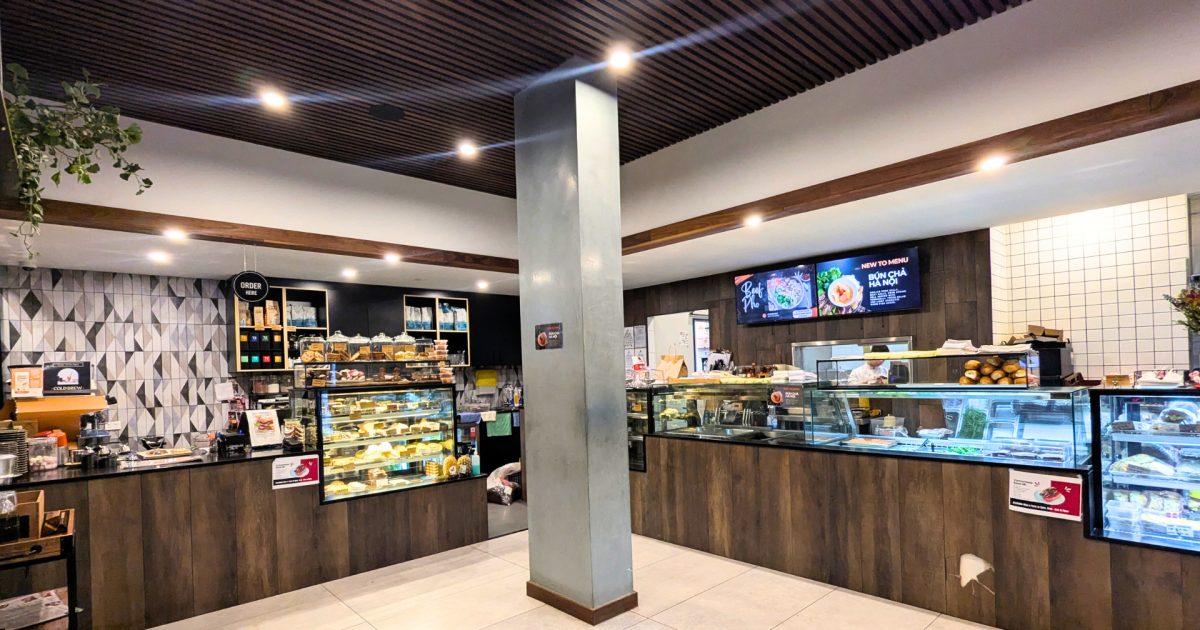
Cafe vs tradie business loan comparison showing how lenders assess each application differently – Switchboard Finance
 Café Hub
Café Owners · Tradies · Secured & Unsecured Business Loans
Cafe vs Tradie Business Loans — What Lenders Read Differently
Cafe owners and tradies are both self-employed borrowers, but lenders read their business loan applications through different risk frameworks. Revenue proof, cost structure, lease dependency and asset backing all shift the approval lens — and the gap matters more than most borrowers expect.
Quick Answer
Lenders assess cafe and tradie business loan applications through different risk lenses — and the gap matters more than most self-employed borrowers expect.
Same ABN, Different Risk Profile
Both cafe owners and tradies hold an ABN, lodge BAS, and trade as self-employed. On paper, they look similar. In a lender's credit model, they sit in different risk buckets entirely. The reason is structural — not personal. Cafes carry a commercial lease obligation that most trade businesses do not. Cafes rely on consumer foot traffic that fluctuates with weather, school holidays and public transport. Tradies generate revenue through contracted project work with defined scope and payment milestones.
This structural gap shows up in approval timelines, documentation requirements and the type of security a lender expects. A tradie with two years of clean bank statements and a signed contract can receive conditional approval on a business loan within days. A cafe owner with the same trading history may face additional questions about lease tenure, landlord arrangements, and the split between dine-in and takeaway revenue. Neither borrower is stronger or weaker — but the assessment pathway is different, and knowing the difference shapes how you prepare your application.
How Lenders Read Each Application
The comparison below maps the six factors that create the biggest divergence between a cafe and a tradie business loan assessment. Every factor feeds into the same credit decision, but the weight each carries shifts depending on which borrower is sitting across the table.
The asset-backing gap is where the two lanes diverge most sharply. A tradie's ute, tools, and equipment have resale value that a lender can register a security interest against. A cafe's espresso machine and fitout have thin residual value outside the venue — and the venue itself is leased, not owned. This is why cafe owners are more likely to be asked for property security or a personal guarantee on larger secured business loan facilities, while tradies can often secure the loan against the asset being financed. See how asset-backed structures work across the tradie hub.
Revenue Proof: POS Merchant Data vs Progress Claims
Lenders verify revenue differently for each borrower type because the income arrives in different shapes. A cafe owner's revenue is a continuous daily stream — hundreds of small transactions through EFTPOS and POS terminals. A tradie's revenue is lumpy — larger progress claims and invoices paid on 14- to 30-day terms. Both are legitimate proof of turnover, but they answer different questions for the credit assessor.
For cafe owners, lenders look at merchant settlement statements (typically the last 6 months) to confirm average daily and weekly takings. They cross-reference these against BAS lodgements to check that the GST-reported turnover aligns with the banking data. Discrepancies between POS data and BAS figures are the single most common reason cafe applications stall — not because the cafe is underperforming, but because the numbers are not reconciled before lodgement.
For tradies, lenders prefer to see a combination of bank statements showing incoming progress payments and a pipeline of signed quotes or contracts. The contract pipeline gives the lender forward-looking confidence that cashflow will continue — something a cafe can only demonstrate through historical trading patterns.
If your cafe's merchant data and BAS are already aligned, you are ahead of most applicants. If they are not, talk to a broker about how to reconcile before you lodge.
Lease Dependency and the Cost Structure Gap
A commercial lease is the single biggest structural difference between a cafe application and a tradie application. Cafes carry a fixed monthly lease obligation — typically their second-largest cost after wages — that does not flex with revenue. A quiet month still costs the same in rent. A tradie working from a home garage or sharing a yard has no equivalent fixed cost anchor.
Lenders factor lease tenure into their loan servicing calculation. A cafe with 18 months remaining on its lease looks very different to a cafe with five years. Short remaining tenure introduces re-lease risk: if the landlord does not renew, the business loses its location — and with it, most of its value. This is why lenders often ask cafe owners to provide a copy of the lease agreement and any renewal options as part of the application pack.
Labour costs compound the gap. According to Fair Work Australia, hospitality award rates include penalty loadings for evenings, weekends and public holidays that can push hourly costs significantly above base rates. The Government has submitted for above-inflation in the 2026 Annual Wage Review, with the decision expected early June. A tradie who operates as a sole trader or subcontracts labour avoids this layered cost structure entirely.
The practical takeaway: cafe owners who present a clear breakdown of rent-to-revenue ratio and wage-to-revenue ratio in their application give the lender the margin visibility they need to move faster. A ratio around one-third revenue to wages, one-third to stock and rent, and one-third to operating margin is the benchmark most credit assessors reference for a healthy cafe.
What Works for Cafe Loan Approval
- 6+ months of merchant settlement data reconciled to BAS
- Commercial lease with 3+ years remaining or renewal option
- Clear wage-to-revenue ratio under 35%
- Consistent daily takings without unexplained dips
- GST-registered with clean ATO portal
What Stalls a Cafe Application
- POS data that does not match BAS-reported turnover
- Lease expiring within 12 months with no renewal clause
- High cash-to-EFTPOS ratio without clear documentation
- ATO debt without an active payment arrangement
- No separation between personal and business accounts
Why Working Capital Structures Differ by Persona
The type of working capital facility that works best also splits along the cafe-tradie divide. Tradies typically need working capital to bridge the gap between completing a stage and receiving a progress payment — a short, defined funding window with a clear repayment trigger. A line of credit or short-term facility covers this cleanly.
Cafe owners need working capital for a different reason: smoothing the gap between daily operating costs (wages, stock, rent) and the natural revenue dips that hit during quiet periods, school holidays, or after a disruption like a road closure or building works. The funding window is less defined and the repayment trigger is not a single invoice — it is a return to normal trading patterns. This is why cafe owners often find a working capital loan with a fixed repayment schedule more predictable than a revolving facility.
For a detailed comparison of how LOC and working capital facilities perform for cafe-specific cashflow patterns, see the cafe LOC vs working capital loan comparison.
Cafe owners and tradies are both self-employed borrowers applying for business loans through the same lender panels. The difference is not creditworthiness — it is how each business generates, proves, and sustains revenue. Cafes carry lease obligations, award-rate labour costs, and thin asset backing that shift the lender's risk lens. Tradies carry contract-backed revenue, depreciable assets, and lower fixed-cost exposure. Neither profile is inherently stronger, but they require different preparation.
Key takeaway: The proof pack you present — not the size of your turnover — determines how fast your cafe business loan moves through credit.Frequently Asked Questions
Cafe owners with seasonal revenue patterns can absolutely get approved for a business loan. Lenders assess the average monthly turnover across a 6- to 12-month window, not just the peak or trough. The key is presenting merchant settlement data that covers at least one full seasonal cycle so the credit assessor can see both the dip and the recovery. Non-bank lenders who specialise in hospitality are particularly comfortable with seasonal patterns because they assess cashflow rather than taxable income. A broker who understands the cafe finance landscape can match you with lenders who weight trading consistency over peak revenue.
Lenders treat cafe and tradie revenue differently because the revenue arrives in different shapes and carries different risk profiles. Cafe revenue is a continuous daily stream of small consumer transactions — verified through EFTPOS merchant data and cross-referenced against BAS lodgements. Tradie revenue is a series of larger progress claims and invoices tied to contracted work with defined payment milestones. Lenders view contract-backed revenue as lower risk because it has a known payer and a defined timeline. Cafe revenue, while often higher in total annual turnover, is consumer-dependent and subject to external disruptions like weather, roadworks, or public holiday closures.
The security requirement depends on the loan size and the lender. For smaller facilities (under approximately $100,000, illustrative only), many non-bank lenders offer unsecured business loans backed by a personal guarantee and strong merchant settlement data — no property required. For larger facilities, lenders typically want either a secured charge over business assets, a second mortgage over residential property, or both. Cafe equipment (espresso machines, commercial ovens, display fridges) has thin resale value outside the venue, so it rarely satisfies a lender's security requirement on its own. A broker can structure a blended facility that uses available security without over-exposing personal assets. Start with the business loans overview to see the options.
Cafe applications are not inherently harder — they are structurally different. Tradies benefit from contract-backed revenue, depreciable assets, and lower fixed-cost exposure, which means lenders can assess their applications faster and with fewer supporting documents. Cafe owners carry a commercial lease, award-rate labour costs, and consumer-dependent revenue, which requires the lender to verify additional data points before making a decision. The approval rates are comparable once the right documentation is presented. The difference is preparation time: a cafe owner who presents a clean proof pack — merchant data reconciled to BAS, lease copy, and wage breakdown — typically receives a decision within the same timeframe as a well-prepared tradie. See the cafe loan pack for the complete document checklist.
Cafe owners and tradies use working capital for fundamentally different purposes. A tradie draws working capital to bridge the gap between completing a project stage and receiving the progress payment — a defined, short-term funding need with a clear repayment trigger. A cafe owner uses working capital to smooth operating costs (wages, stock, rent) during seasonal dips or after disruptions when revenue drops but fixed costs remain. This means a working capital loan with a fixed repayment schedule is often more predictable for a cafe than a revolving line of credit, because the repayment does not depend on a single invoice being paid. The right structure depends on your cashflow pattern — a broker can model both options against your actual trading data.

 FBAA Accredited
