
Manufacturing Plant & Equipment Quote Checklist (2026)
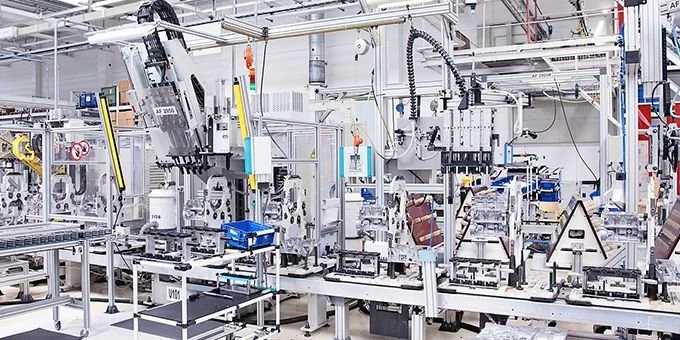
Manufacturing plant & equipment quote checklist for manufacturing businesses – Switchboard Finance
 Insights · Asset Finance
Manufacturing Plant & Equipment Quote Checklist (2026): 18 Line Items That Prevent Re-Quotes and Cut Approval Delays
A manufacturing machinery quote can be “accurate” but still not approval-ready. If key fields are missing (serial/compliance details, itemisation, supplier ABN), the file slows down because the lender (or valuer) has to ask for a re-quote.
This checklist is for Plant & Equipment purchases where you want the quote to sail through with fewer follow-ups. Use the 18 line items below and you’ll cut the “back-and-forth” that drags approvals out.
- Hub (non-negotiable): Business Owners Finance Hub
- Persona hero explainer (non-negotiable): 11 Signs Your Business Is Ready for Asset Finance in 2025
- Money page (forced target): Low Doc Asset Finance
- Winner seed #1: Asset Finance Bank Statement Red Flags (2026)
- Winner seed #2: What Is a Payout Figure? (Asset Finance)
- Sibling post #1: Top 5 Mistakes Business Owners Make When Applying for Equipment Finance
- Sibling post #2: The Pre-Sale Consolidation Playbook (2026)
An “approval-ready” quote is one that lets the lender verify (1) supplier identity, (2) asset identity, and (3) clean pricing itemisation without asking for follow-up documents. If those three aren’t clear, the consequence is re-quotes and timeline drift.
| What must be clear | What the lender/valuer is trying to confirm | What usually causes delays | Outcome when fixed |
|---|---|---|---|
| Supplier identity | Who is being paid (and that they’re legitimate) | Missing ABN / mismatched supplier trading name | Fewer follow-ups |
| Asset identity | Exactly what’s being financed | No serial/compliance plate detail on quote | Cleaner valuation |
| Itemised pricing | What’s included (and what’s not) | Freight/install bundled as one line | Less re-quoting |
1) The 18 quote line items (manufacturing machinery edition)
Treat this like a “quote spec sheet”. If you send a quote that hits these 18 items, the file is easier to verify and the approval pathway stays tight.
If you miss them, the consequence is predictable: someone asks questions, the supplier edits the quote, and you lose days.
| # | Line item | Why it matters | Quick check |
|---|---|---|---|
| 1 | Supplier legal name | Confirms payee identity | Matches supplier registration |
| 2 | Supplier ABN | Stops compliance follow-ups | ABN present on quote |
| 3 | Supplier address + contact | Verifies trading presence | Email/phone included |
| 4 | Quote number | Version control for re-issues | Unique quote reference |
| 5 | Quote date | Shows currency of pricing | Not stale |
| 6 | Quote expiry date | Prevents settlement surprises | Expiry clearly stated |
| 7 | Buyer entity name | Stops “name mismatch” delays | Matches your application entity |
| 8 | Asset description | Defines what is financed | Specific, not generic |
| 9 | Make + model | Standard verification field | Both included |
| 10 | Serial number (or unique ID) | Asset identity lock | Not “TBA” for used equipment |
| 11 | Compliance plate details (if applicable) | Reduces valuer uncertainty | Plate info noted |
| 12 | Year / build date | Supports valuation logic | Year stated |
| 13 | Condition (new/used/demo) | Changes valuation approach | Condition explicit |
| 14 | Asset location (suburb/site) | Helps inspection planning | Location stated |
| 15 | Base price (ex GST) | Clear funding calc | Ex-GST shown |
| 16 | GST amount + total (inc GST) | Stops math disputes | GST split shown |
| 17 | Freight / rigging / delivery itemised | Avoids bundled “grey costs” | Separate line item(s) |
| 18 | Install / commissioning itemised + payment terms | Prevents re-quotes at settlement | Install split + deposit/timing clear |
A fabrication shop ordered a CNC with freight + install bundled into one number and the buyer name missing the “Pty Ltd”. The supplier had to re-issue the quote twice. The finance didn’t fail — the paperwork loop added almost a week.
2) The “re-quote triggers” that slow manufacturing approvals
The main trigger is uncertainty: if the asset can’t be uniquely identified, or the quote isn’t itemised, the file becomes “manual”. Manual files queue behind clean files.
If these triggers show up, the consequence is a re-quote request (or valuation back-and-forth) right when you’re trying to lock delivery dates.
| Trigger | Why it causes a delay | Fix that prevents re-quotes |
|---|---|---|
| Serial/compliance fields missing | Asset identity isn’t locked | Ask supplier to add serial/plate detail on the quote |
| Freight/rigging bundled into base price | Hard to validate what’s being funded | Split freight/rigging as separate line items |
| Install/commissioning not itemised | Creates ambiguity on “what’s included” | Separate install/commissioning as its own line |
| Buyer name mismatch | Docs don’t match the entity applying | Re-issue quote with exact entity name |
| GST split unclear | Totals don’t reconcile cleanly | Show ex GST + GST + inc GST clearly |
A supplier provided a “quote” that was effectively an email with a single total figure. Once it was converted into a proper Tax Invoice-style itemisation (with install/freight split), the approval moved without extra questions.
If your manufacturing quote is missing identity fields (supplier/asset) or clean itemisation (GST/freight/install), you invite re-quotes and valuation follow-ups.
Use the 18 line items above and you’ll reduce the paperwork loop that drags approvals out. If you’re buying high-value machinery with tight delivery windows, this is the difference between “smooth” and “stuck”.
FAQs
Fast answers for manufacturing businesses trying to keep plant & equipment approvals moving.
Use the hubs for navigation, then skim the latest posts below.
- Asset Finance Bank Statement Red Flags (2026)
- The Pre-Sale Consolidation Playbook (2026)
- Medical Vehicle Refi: Chattel Mortgage vs Lease (2026)
- Business Vehicle Refinance After Insurance Claim (2026)
- What Is a Payout Figure? (Asset Finance)
- Low Doc Car Loan With ABN (No Tax Returns)
- 5 Cash Flow Warning Signs Your Business Needs a Finance Safety Net
- Top 5 Mistakes Business Owners Make When Applying for Equipment Finance
Newest business owner guides
Newest in the Business Owners Finance Hub
Four fresh, lender-practical reads for business owners — covering timing, setup gaps, case-study structure and equipment documentation.
SME Service-Van Replacement Window (2026)
A 90-day upgrade plan before downtime, rego clusters and repair bills start eating margin.
The Landlord Incentive Gap (2026)
How to cover bond, fitout deposits and first stock before the rent-free period actually helps.
Case Study (Melbourne Service SME) (2026)
How a 3-van cleaning business replaced its fleet, added a fourth van and built a wage buffer.
Packaging Line & Labelling Equipment Finance (2026)
A docs-and-timeline guide for packaging line submissions before re-quotes and follow-up friction kick in.
