
South East Melbourne Truck Finance (2026): Owner-Driver Checklist for Depot-Based Operators
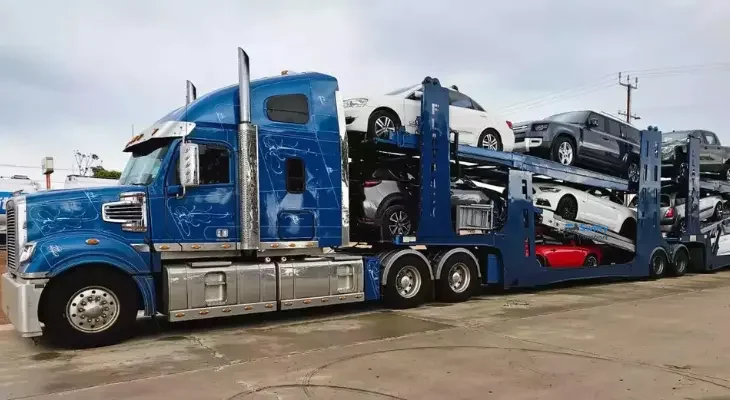
South East Melbourne truck finance checklist for owner-drivers | Switchboard Finance
 Insights · Trucker / Transport
South East Melbourne Truck Finance (2026): Owner-Driver Checklist for Depot-Based Operators
If you’re a trucker doing depot runs in South East Melbourne, approvals usually don’t slow down because “the truck is wrong” — they slow down because the lender can’t see the operating reality of the transport business: dockets → invoices → cashflow, maintenance rhythm, and valuation-ready details. This is a local checklist built for owner-drivers and small fleet operators who want speed without enquiry damage.
Start at the transport lane: Truckie Hub. For the wider context on how lenders think about multiple assets and fleets, read What is Fleet Finance.
For South East Melbourne depot operators, the fastest truck finance outcomes come from a “local proof pack”: consistent banking patterns, clean dockets/invoices, and a valuation-ready asset folder. If you don’t provide this up front, the consequence is predictable: follow-up requests, conservative valuations, and deposit surprises.
| Checklist item | What it proves | Why it speeds approvals | If missing |
|---|---|---|---|
| Depot-run income trail (dockets → invoices) | Repeatable logistics work + payment cycle | Stops “where does the money come from?” loops | More questions + slower decision |
| Banking pattern proof (6 months) | Cashflow rhythm vs peaks/troughs | Lets assessors size repayments faster | Rework + queue resets |
| Valuation-ready asset folder | Truck details are “easy to value” | Reduces conservative calls from valuers | Deposit requests jump |
| Maintenance rhythm (simple log) | Operational risk is managed | Improves confidence on heavy-use vehicles | Risk haircut / slower review |
| ABN + entity basics | Borrower identity + trading legitimacy | Prevents entity mismatch delays | Can’t move to docs |
1) The South East Melbourne “depot operator” profile (what lenders want to see)
Depot-based work is high frequency and timing-sensitive. The lender wants proof that your transport business runs on repeatable logistics cycles — not one-off spikes — especially when you’re operating around Dandenong, Clayton, and Moorabbin.
If you don’t frame it as “repeatable depot work,” the consequence is the lender treats it as less predictable income, which slows the file and tightens sizing.
• 10–20 dockets (recent) + matching invoices (same jobs)
• A short note on payment cycle (e.g., weekly / fortnightly / 14–30 days)
• A simple run sheet summary (days, routes, depot type, subcontractor vs direct)
• Maintenance rhythm snapshot (dates + km intervals)
• Truck details pack (VIN, specs, add-ons list, photos)
An owner-driver doing repeat depot runs had strong revenue, but sent only a quote. The lender asked “prove continuity.” When the operator supplied dockets → invoices + a one-paragraph payment cycle note, the file stopped bouncing and moved to valuation.
2) Valuation speed in industrial zones (stop the “conservative” outcome)
South East Melbourne trucks often have real working upgrades (PTO, tail-lift, hydraulics, telematics). If the evidence is weak, valuers default conservative — and conservative valuations are exactly how deposits jump.
If you don’t prepare the valuation folder, the consequence is not “a small delay” — it’s often a different structure: more cash in, or a rework loop while you hunt proof.
• Clear photos: dash km, VIN plate, add-ons installed
• Add-ons list with brand/model (where possible)
• Any invoices for major upgrades (even partial)
• Dealer invoice + quote consistency check (price, on-road, fit-out)
Use this dedicated checklist: Truck Add-Ons Valuation Pack (2026).
A transport operator assumed telematics “would count.” The valuer couldn’t verify add-ons properly and valued the truck like a base model. The lender asked for a bigger deposit. When the operator re-submitted with the add-ons pack, the valuation became defensible and the deposit pressure dropped.
3) Banking patterns that keep approvals moving (without enquiry damage)
Depot work creates predictable inflows, but it can look messy if statements are incomplete or exports are inconsistent. The fastest way to keep the credit file clean is to pre-pack the evidence so the lender can size without repeated pulls.
If you send partial or inconsistent exports, the consequence is rework and delays — and “rework delays” are how files end up with unnecessary steps before a decision.
• Same date range across exports (no gaps)
• Match deposits to your invoicing rhythm
• Flag one-off items (tax, insurance, repairs) in a short note
• Provide bank statements as PDF exports (not screenshots)
A fleet operator had strong cashflow but sent screenshots with missing pages. The lender asked for re-exports, then asked again. A clean PDF export for the same period removed the back-and-forth and kept the approval timeline intact.
4) The “SE Melbourne owner-driver” submission path (simple, fast, repeatable)
If your goal is speed, treat this as a repeatable submission process: local proof + valuation pack + clean banking. Then place the truck in the right lane so the lender reads it as a standard asset deal, not a messy restructure.
If you submit without a clear lane, the consequence is the lender pauses to interpret purpose and risk — and pauses are where timelines blow out.
For most depot-based operators, the clean path is Low Doc Asset Finance — then build your proof pack around it. If you want the “compliance evidence” version of this submission bundle, read: Transport Compliance Proof Pack (2026).
And if you want the full general checklist for owner-drivers, pair this with: Truck Finance Checklist 2025.
A depot-based owner-driver tried to “explain it all” in a long email. The lender still asked for the same files. When the operator switched to a checklist-based pack (local proof + valuation folder + clean banking), the file became assessable on first pass.
Truckers, owner-drivers, transport & logistics businesses in South East Melbourne get faster truck finance outcomes when the lender can see three things on Day 0: (1) repeatable depot income (dockets → invoices), (2) valuation-ready asset details, and (3) clean banking that reflects the cashflow cycle.
Start at the Truckie Hub, then read What is Fleet Finance. If deposits are being driven by valuation conservatism, use Truck Add-Ons Valuation Pack (2026).
FAQs (fast answers)
Quick answers for depot-based operators targeting speed and fewer deposit surprises.
The lender wants to see repeatability (dockets/invoices) and a clear payment cycle. Depot work can be very stable — but only if it’s packaged clearly.
Deposits jump when valuations go conservative (often because add-ons aren’t evidenced well). The fix is a valuation-ready asset folder and add-ons proof.
Send the income trail (dockets → invoices) and the asset folder together. If the lender can value and verify work continuity on the first pass, the file moves.
Yes — even a basic maintenance rhythm snapshot reduces “operational risk” questions on high-use transport assets, which helps approvals stay clean.
Package the proof properly so the lender can size and value quickly. The most common cause of extra steps is rework — incomplete statements, unclear income trails, or weak asset details.
