
Livestock Transport Finance (2026)
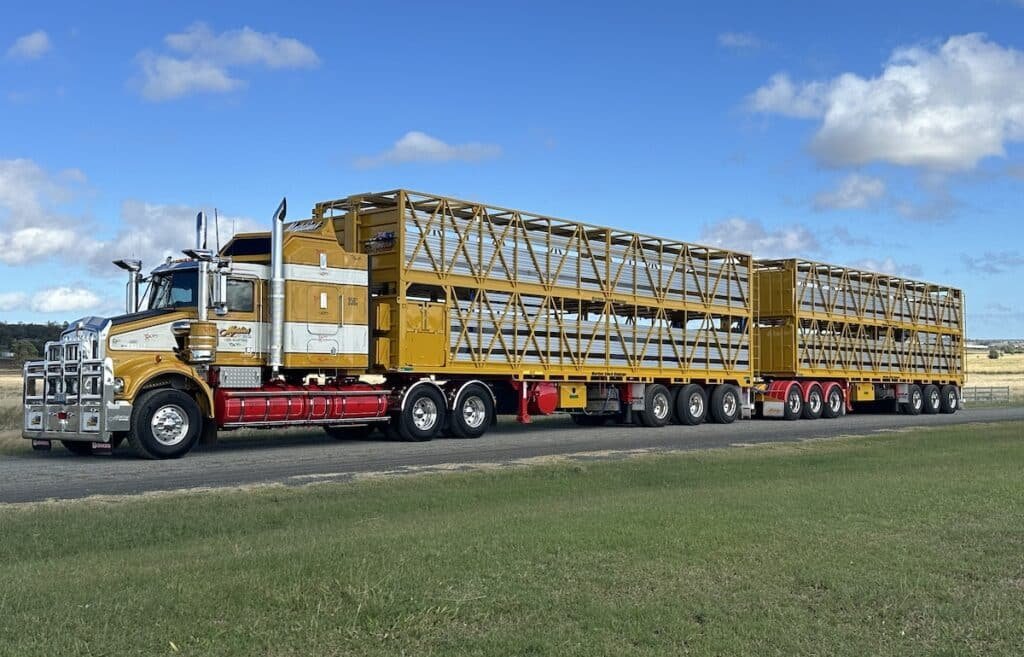
Livestock transport finance for cattle and sheep operators – Switchboard Finance
 Insights · Truckie Hub
Livestock Transport Finance (2026): Cattle & Sheep Run Contracts, Wash-Down Bay Compliance & the Income Proof Pack for ESCAS-Registered Operators
Livestock operators can look stronger in real trade than they do in a messy file. The challenge is that cattle and sheep work is often seasonal, contract-based and compliance-heavy, so the strongest operators still get slowed down when the income story, contract evidence and operating setup are not presented cleanly.
This page is not a generic truck finance checklist. It is a livestock-transport submission guide for operators whose file needs to show run consistency, wash-down readiness and a clearer trading pattern — especially where the work sits in export-aligned or broader ag-transport chains.
- Hub (non-negotiable): Truckie Hub
- Persona hero explainer: What Is Fleet Finance and How Does It Work?
- Money page of the month (forced target): Low doc cashflow path from one facility to LOC, WCL and Invoice Finance for Australian business owners – Switchboard Finance
- Winner seed #1: Ag Transport Proof Pack: The 9 Items That Get Grain/Livestock Upgrades Approved Faster
- Winner seed #2: Mixed Income (Farm + Cartage) and Low Doc Assessment (2025)
- Sibling post #1: Docket-to-Pay Cycle + Invoice Finance (Transport-Specific) (2025)
- Sibling post #2: BAS + Fuel + Repairs Buffer (2025): Facility Usage Rules for Transport Operators
- Glossary (unique, no repeats): Facility and Working Capital
Livestock transport approvals usually get cleaner when the lender can see three things fast: stable run income, contract continuity and operational readiness. If the file only shows rough turnover without contract context, compliance detail or seasonal explanation, the consequence is usually more follow-up questions, slower credit review and a weaker first read.
| File area | What lenders want to understand | What usually weakens the file | What strengthens the read |
|---|---|---|---|
| Income pattern | How run revenue behaves across the season | Lumpy deposits with no context | Clear explanation of peak and off-peak periods |
| Contracts | Whether work is recurring and credible | Verbal-only job pipeline | Run confirmations, repeat-customer evidence and recent work history |
| Operations | Whether the setup looks commercial and ready | Generic truck file with no livestock detail | Wash-down, site process and route-specific readiness explained cleanly |
| Cash pressure | How the operator handles timing gaps | No explanation of input timing | Simple map of fuel, BAS, repairs and seasonal carry periods |
1) Why livestock transport files get misread even when the operator is solid
Livestock transport is not always a neat “same invoice, same amount, same week” business. Income can move with season, livestock flow, route demand and customer timing. That does not automatically make the file weak — but it does mean the file needs more context than a standard metro courier or general freight submission.
This is where good operators get caught. If the lender sees irregular deposits without the contract story around them, the file can look less stable than it really is. If you leave that context out, the consequence is usually that a commercially sound operator gets assessed like a messy one.
- Seasonality changes the pattern: strong operators can still have uneven-looking months.
- Route work can be contract-heavy: the quality of the run matters as much as the raw deposits.
- The file needs translation: the lender has to understand the business model, not just the account snapshot.
A livestock carrier may have strong repeat work and good margins, but if the bank feed only shows uneven deposits with no seasonal or contract explanation, the first credit read can still be harsher than it should be.
2) Why cattle and sheep run contracts matter more than generic turnover screenshots
Turnover matters, but turnover on its own does not explain durability. In livestock transport, run contracts, repeat lane work and customer continuity help show whether the operator is simply having a good month or actually has a recurring commercial base.
That distinction matters because contract visibility helps the lender understand what is likely to continue. If the file only shows deposit totals and no real run evidence, the consequence is usually more uncertainty around how dependable the next few months really are.
- Run history shows repeatability: recurring work reads better than one-off spikes.
- Customer concentration needs context: one strong contract can help, but it needs to be explained properly.
- Current work beats vague pipeline: clearer recent proof makes the file easier to back.
Two operators can show similar deposits, but the one who also shows repeat sheep and cattle run evidence usually reads as more stable than the one relying on raw turnover screenshots alone.
3) Why wash-down and operating-readiness detail can clean up the file
In livestock work, operating readiness matters because the lender is not just assessing a truck. They are also assessing whether the operator looks like a real, functioning business in the lane they say they serve. Clean wash-down process, yard readiness and route-specific operating discipline can all help the file read more commercially.
This is not about overloading the submission with random paperwork. It is about making the operating setup believable. If you submit a livestock file with no practical detail around how the work is actually handled, the consequence is usually a flatter, more generic read than the business deserves.
- Show operating logic: the file should match the kind of work being claimed.
- Avoid a generic truck submission: livestock work has different operational signals.
- Keep it commercial, not cluttered: relevant detail helps; random detail confuses.
A carrier doing livestock runs may not need to drown the file in extra documents. They just need enough operating detail to show the lender this is a genuine livestock-transport setup, not a generic truck deal with missing context.
4) How to explain seasonal income without making the file look weaker
Seasonal trading is not the same as unstable trading. The key is to explain the rhythm properly. A cleaner file shows which months are naturally stronger, which periods are quieter and why the quieter windows do not mean the business is failing.
That matters because silence creates the wrong story. If the lender is left to interpret the dips without context, the consequence is usually that normal livestock seasonality gets mistaken for inconsistency or declining demand.
- Frame the cycle: show what peak months normally look like.
- Explain the softer windows: a dip with context reads better than a dip with no story.
- Keep the pattern readable: simple explanation beats a messy data dump.
An operator might have a lighter off-season patch followed by a strong livestock movement window. When that pattern is explained clearly, it reads as business rhythm rather than financial weakness.
5) What a cleaner livestock income proof pack actually does
The goal is not to make the file bigger. The goal is to make it easier to understand. A clean livestock proof pack helps the lender see where the income comes from, how repeatable it is and how the operator carries the quieter parts of the cycle without turning the submission into a blurred story.
In practice, that usually means separating the operating story, the contract story and the timing story. If you jam all three together without structure, the consequence is usually a harder credit read and more time spent answering questions that could have been prevented upfront.
- Keep the story segmented: contracts, seasonality and cash timing should each be readable.
- Show how the business carries gaps: this is where the structure matters.
- Make the file easier to approve, not just bigger: clarity is the win.
A livestock operator may not need a bigger submission. They may simply need a cleaner pack that shows the lender how run income, seasonal timing and operational readiness fit together as one credible transport business.
Livestock transport deals usually improve when the file shows more than raw deposits. Cattle and sheep run continuity, cleaner operating detail and a readable seasonal income explanation make the business easier to understand and easier to assess.
Start with the Truckie Hub, then use the ag-transport and cashflow pages already linked above to clean up the proof pack before a workable deal gets slowed down by avoidable follow-up. If you leave the income story blurry, the consequence is usually a slower and less confident credit read.
FAQs
Quick answers on livestock run contracts, seasonal income proof and cleaner transport submissions.
Use the hubs to navigate, then work through the last 8 blogs from the list above.
- Melbourne NDIS Provider Vehicle Finance Checklist (2026): People Movers, Wheelchair Vans & the 9 Proof Items That Speed Up Low Doc Approval
- What Is LVR in Asset Finance? (2026): How Lenders Calculate Loan-to-Value Ratios for Vehicles, Equipment & Plant — 3 Scenarios Where Your LVR Changes the Deposit Before Rate Is Even Discussed
- The Harvest Window Application Plan (2026): How Mixed-Income Ag Contractors Time Ute, Light Truck & Trailer Finance Around Peak Revenue — So They're Assessed at Harvest Income, Not Off-Season
- Geelong & Bellarine Café + Hospitality Finance Checklist (2026): The Local Proof Pack for Waterfront, Tourism-Season & Industrial-Strip Venues
- SME Service-Van Replacement Window (2026): The 90-Day Upgrade Plan Before Downtime, Rego Clusters & Repair Bills Start Eating Margin
- The Landlord Incentive Gap (2026): How to Cover Bond, Fitout Deposits & First Stock Before the Rent-Free Period Actually Helps
- Case Study (Melbourne Service SME) (2026): How a 3-Van Cleaning Business Replaced Its Fleet, Added a 4th Van and Set Up a Wage Buffer — Without a Single Hard Enquiry on the Trading Account
- Packaging Line & Labelling Equipment Finance (2026): The 14-Item Docs Checklist + 7-Day Approval Timeline for Food & Consumer Goods Manufacturers
New posts
Latest insights
Four of the newest posts across transport finance and One Doc home loans.
Adelaide Truck Finance Checklist (2026)
Owner-driver proof pack for Port Adelaide freight, Barossa wine transport and Murray Bridge ag runs.
Truck Downtime Finance (2026)
How owner-drivers can manage repairs, lost revenue and finance pressure when the truck is off the road.
Truck Finance Credit Notes Explained (2026)
Why two owner-drivers with similar numbers can still get different lender outcomes.
5 Mistakes Owner-Drivers Make When Applying for a One Doc Home Loan (2026)
The common One Doc errors that can weaken a transport operator’s home loan file before submission.
