
Buying at Auction Before You Sell
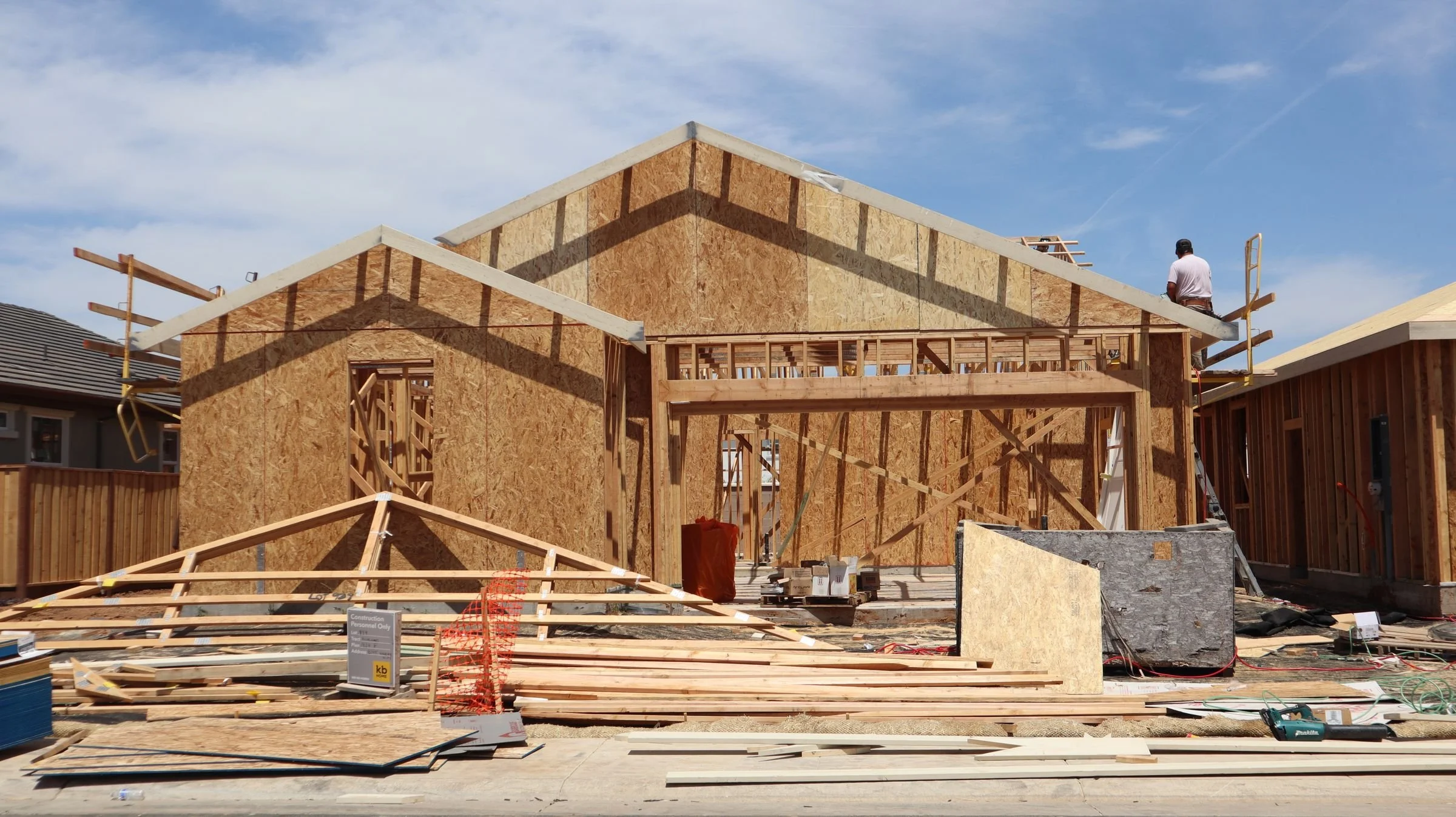
What a lender needs before you bid unconditionally on a new home while your existing one is unsold, and why having no contract on it changes the answer.
 Property Lending Hub
Bridging Loan · Auction Day · Unsold Home
An auction bid is unconditional, and on the day you bid your existing home has no contract on it. That combination, not the auction itself, is what decides whether a lender will back you.
Quick Answer
Yes, a bridging loan can fund an auction purchase before your home sells, but only if the finance is arranged before you bid. An auction contract is unconditional, so your exit strategy has to be approved rather than assumed.
Part of the bridging finance guide, alongside what happens after a decline.
Also called: auction bridging finance, a buy before you sell loan, buying unconditionally before selling. They all describe the same position, a signed unconditional purchase carried by short-term finance while the home you are leaving is still on the market.
Can a bridging loan fund an auction purchase before your home sells?
Yes, a bridging loan can fund an auction purchase before your existing home sells, and that is the ordinary use of one. The loan carries the new property while the old one is still on the market, then reduces when that sale settles. What the auction changes is not the product. It is the amount of certainty the lender has to work with on the day you sign.
An auction contract is a different animal to a private treaty offer. There is no finance clause, no subject to sale condition, and cooling off rights generally do not apply to a property bought under the hammer at a public auction, though the rules differ by state and your solicitor is the person to confirm that for your contract. The contract is signed on the day, the deposit is payable on the day, and the settlement date is the vendor's rather than yours. Every one of those becomes a lender problem if the funding is not already sitting behind you.
If you are still weighing up the structure rather than the auction, the guide to buying before selling when you are self employed covers the general case, and the comparison of bridging loans, caveat loans and second mortgages covers which short term structure fits which problem. A mortgagee auction is a different transaction again and is covered separately. This page answers the narrower question: what has to be true before you raise your hand.
What does pre-approval have to cover before you raise your hand?
Pre-approval has to cover both properties and the gap between them, not just the new loan. A pre-approval written against the purchase alone tells you nothing about whether the lender will carry your existing mortgage at the same time, and carrying both at once is the entire point of a bridging loan.
The position a lender sizes first is the one at its heaviest, which is the combined debt across both properties during the months you hold them. That figure, not the purchase price, is what your pre-approval needs to be written against. Underneath it sit four things: a valuation on the home you are selling, an exit strategy the lender has accepted in writing, a deposit source that does not depend on the loan settling, and a settlement date that the funding can actually meet. Pre-approval remains conditional in every case, so treat it as a ceiling the lender has agreed to test rather than as money in hand.
| What has to be in place | Why the lender needs it | When to have it |
|---|---|---|
| Written pre-approval covering both properties | It is the only document that says a lender will fund the new purchase while your existing mortgage stays in place | Before the property you want goes to market, not in the final week |
| A lender valuation on your existing home | Your limit is built on the lender's number rather than the agent's appraisal | As soon as you identify a property you would bid on |
| An exit strategy accepted in writing | The sale of your existing home is the repayment, so it is assessed rather than assumed | With the pre-approval, not afterwards |
| Deposit funds you already control | The deposit falls due at the hammer and no loan settles that day | Before you register to bid |
| Your solicitor across the contract and the settlement date | The date is the vendor's and it sets every funding deadline behind it | Before the auction, while the contract can still be queried |
| A bidding limit written down | An auction is a poor place to work out what you can carry | Before auction day, and agreed with whoever is bidding |
What deposit do you have to pay on the fall of the hammer, and where does it come from?
The deposit falls due the moment the hammer falls, and it has to come from money you already control. That is the opposite of the position in a simultaneous settlement, where the sale proceeds arrive on the same day the purchase needs them. It is typically 10 per cent of the purchase price, though the real figure is whatever the contract says, and a smaller deposit can only be negotiated with the vendor before the auction rather than after it.
This is the point most buyers get wrong. A bridging loan does not settle on auction day, so it can never be the source of the auction deposit. The loan settles when the purchase settles, weeks later, which means the deposit has to be sitting in cash, in redraw, or in a facility that was approved and documented before you walked into the room. The deposit is also the money at risk if the purchase cannot settle, and that scenario belongs to the guide on an unconditional auction purchase when the bank is too slow rather than to this page.
| Source | What it is | What has to be in place before auction day |
|---|---|---|
| Cash savings | Money already sitting in your own account | Cleared funds, and evidence of where they came from if the lender asks |
| Redraw or offset on your existing home loan | Money you have already paid into your current loan | Redraw available and not restricted, and confirmation your current lender will release it while a bridging loan application is open |
| A short term advance against the equity in your existing home | A separate facility secured against the property you are selling | Approved and documented in advance, because it cannot be arranged between the hammer and the deposit |
| A deposit bond or bank guarantee | A substitute for cash that the vendor agrees to accept in place of a deposit | Issued in advance by the provider, and accepted in the contract terms, which is a question for the vendor's agent before the auction |
Why does having no contract on your existing home change the lender's answer?
Having no contract on your existing home changes the answer because it removes the two things most lending policy in this space is built around: a known sale price and a known settlement date. On auction day you have not sold, so the loan you are asking for is by definition the uncontracted one. The industry name for that case, and the one the search engines now return, is an open bridging loan, and the pricing and loan to value mechanics that separate it from the contracted case are covered on their own page rather than here.
What matters on auction day is the consequence. As at March 2026, the non-bank pattern on this lane runs approximately six to 12 months where a contract of sale exists and up to around 12 months where it does not, with the uncontracted case assessed at a lower percentage against the existing security. More sharply, as at May 2026 at least one non-bank lender requires an unconditional contract of sale before it will lend at all, which means it cannot fund an auction day purchase under any structure. That is the single best reason to have the lender chosen before the auction rather than after it.
The equity and combined value percentages that appear at the top of a search on this question come from a small number of major bank pages and describe a property that is already under contract. Treating them as the market's numbers is a mistake that only shows up at the worst possible moment, which is after you have signed. The usual outcome is a buyer who has read a figure, assumed it applies, and discovers on the Monday that the loan to value ratio the lender will actually work to is a different one.
| Policy point | Major banks | Non-bank lenders |
|---|---|---|
| Maximum term | Typically up to around 12 months, as at August 2026 | Typically around six to 12 months where a contract of sale exists, and up to around 12 months where it does not, as at March 2026 |
| Evidence of a sale | Expected, and the published figures describe a property already under contract | Varies by lender. At least one requires an unconditional contract of sale and therefore cannot fund a purchase on auction day, as at May 2026 |
| How the existing home is assessed | On the lender's valuation, with serviceability assessed against the end debt | On the lender's valuation, with the uncontracted case assessed at a lower percentage against the existing security |
| If it does not sell in time | An extension is a credit decision rather than an entitlement | An extension is a credit decision, and the cost of extending is priced separately |
| Combined value and equity percentages | Published on a small number of lender pages and widely repeated elsewhere | Quoted on application, and the published bank percentages do not describe the uncontracted case |
The uncontracted case is assessed differently again where nothing will be owing after the sale, which is the position in the piece on a bridging loan over 75 with no end debt.
What does a non-bank need from you on auction day itself?
A non-bank needs the signed contract and the deposit receipt in its hands immediately, along with a file that was already complete before you bid. Auction day is a document event for the lender, not a decision event, because the decision should already have been made.
In practice that means the contract and its particulars, recent statements on your existing loan, a rates notice, identification, a what a valuation shortfall does already instructed or already completed on the home you are selling, the exit strategy in writing, and a solicitor who is expecting the file rather than meeting it for the first time. Where the settlement date is short, the sequencing matters more than the paperwork, and the guide to fast settlement finance sets out how that order of operations works.
If the hammer has already fallen and the funding is short, that is a different problem on a different clock, and it is answered in the guide to an unconditional auction purchase when the bank is too slow. This page stops at the moment before the bidding starts.
How does bidding before you have sold change your bidding limit?
Bidding before you have sold changes your limit because the lender, not the agent and not you, sets the number the loan is built on. Your existing home has not been tested by the market yet, so its value is a valuation opinion rather than a sale price, and the uncontracted assessment sits below what a signed contract would support.
The practical effect is that your limit is a settlement position, not an auction feeling. It is the price at which the combined debt across both properties still clears the lender's assessment, the deposit is still payable from money you hold, and the sale of your existing home still repays the loan inside the term. Work it out in advance, write it down, and give it to whoever is bidding, because an auction contract offers nothing to renegotiate afterwards. If the bidding passes the limit, the correct move is to stop, which is easier to do when the number was decided somewhere other than the footpath.
Duty is part of that number and it is a cash cost rather than a borrowing one. In Victoria, for example, the State Revenue Office says duty must be paid before the transfer can be registered, usually at settlement, with penalty tax and interest applying if it is not paid within 30 days of settlement, read 14 September 2026. Every state sets its own due date, so confirm the one that applies before you set the limit. Two habits make that number more reliable. Instruct the what a valuation shortfall does on your existing home early rather than after you find a property, and have the limit confirmed by the lender in writing rather than inferred from a calculator. More background on how these structures sit together is on the property lending hub, and if you want the position tested against your own numbers you can check eligibility before the next auction campaign starts.
An auction purchase and an unsold home are two commitments held at the same time, and the lender is the only party who can make them survive contact with each other. The work is all front loaded: the valuation on your home, the exit strategy in writing, a deposit source that does not rely on the loan, a limit you have agreed to in advance, and a lender that will actually lend against a property with no contract on it. None of that can be arranged between the fall of the hammer and the deposit.
Key takeaway: Decide what a lender will fund before the auction is advertised, because an auction contract gives you nothing to renegotiate afterwards.Frequently asked questions
Bridging finance for an auction property is short term lending that funds the purchase while your existing home is still unsold, and it reduces when that sale settles. On an auction purchase it has to be arranged before you bid, because the contract you sign on the day carries no finance condition. The general structure is set out in the guide to buying before selling when you are self employed.
The equity you need for a bridging loan is set by the lender's assessment of both properties rather than by any single published figure, and it varies by lender and by whether your existing home is under contract. The percentages circulating in search results come from a few major bank pages and describe a property already sold, which is not your position on auction day. The loan to value ratio is the mechanic underneath it, and the only number worth bidding to is one a lender has confirmed in writing.
You can bid at auction with pre-approval only, and most buyers do, but pre-approval is a conditional indication rather than an approved loan. It is normally subject to valuation, to the contract itself and to final credit approval, so once the hammer falls the risk sits with you rather than with the lender. If the money then falls short, that situation is covered in the guide to an unconditional auction purchase when the bank is too slow.
You can make an unconditional offer before selling your home, and at auction you have no other option, but it only holds together if the funding for the gap is already approved. The lender has to be willing to carry both properties at once and has to accept the sale of your existing home as the exit strategy. Arranging that after the contract is signed is the wrong order, and it is where most of the trouble on this lane begins.
You do need a valuation on your existing home before you bid in almost every case, because the lender builds your limit on its own valuation rather than on the agent's appraisal. An appraisal is a marketing estimate and a what a valuation shortfall does is the figure a credit decision actually uses, and the two are often not the same. Instructing it early is what turns a pre-approval into a number you can bid to with confidence.

 FBAA Accredited
