
Café Catering Van & Food Vehicle Finance Documents Checklist (2026)
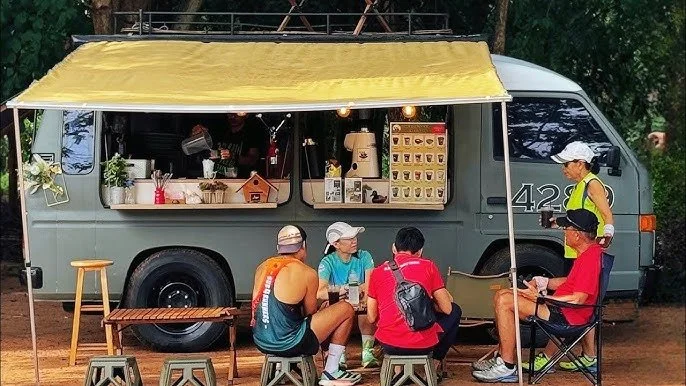
Café catering van and food vehicle finance documents checklist for café operators upgrading a business vehicle – Switchboard Finance
 Insights · Café
Café Catering Van & Food Vehicle Finance Documents Checklist (2026): The 11 Items Lenders Ask For That Standard ABN Vehicle Checklists Don't Cover
A standard ABN vehicle checklist is built for generic business-use cars, utes and vans. Café operators often need more than that. If the van supports catering, delivery, food transport or event work, lenders commonly want extra documents that prove the income source, the operating use and the vehicle setup all make sense together.
This checklist covers the café-specific proof items that sit outside a normal generic vehicle file, so the deal reads cleaner from day one and avoids the predictable follow-up loop that slows approvals.
- Hub (available in this chat): Business Owners Finance Hub
- Persona hero explainer (non-negotiable): Low Doc Loans for Café Owners: How to Upgrade Without the Paperwork Nightmare
- Forced target (best in-chat fit): Low Doc Vehicle Finance for ABN Holders: 2025 Guide
- Winner seed #1: Café Turnover Proof Pack (2026): The 9 Exports That Get You Approved Faster
- Winner seed #2: Café Merchant Facility Risk (2026): Why Card Settlement Structure Changes Your Approval Outcome
- Sibling post (different intent): Low Doc Vehicle Finance Documents Checklist (2025): What ABN Holders Actually Need
- Sibling post (different intent): Café Finance “Day 0” Submission Bundle (2026): The 10 Files That Get Conditional Approval Without Follow-Ups
- Glossary (unique, no repeats): Bank Statements and Vehicle Finance
A café van file usually needs more than ID, ABN and a quote. Lenders often want evidence that the vehicle matches real food-service activity, that the revenue story is visible across your merchant and business account flow, and that any food-specific setup on the van is clearly explained. If those extra items are missing, the file often slows down even if the core deal is still fundable.
| Checklist group | Why it matters | What lenders want to see | Consequence if missing |
|---|---|---|---|
| Revenue proof | Confirms the van supports real trade, not just a plan | Clear sales and settlement evidence | Manual review |
| Café-specific operating proof | Shows catering, delivery or food-service use is genuine | Business-use documents that fit the story | Use-case challenge |
| Vehicle-specific extra docs | Food vehicles often have more setup complexity than a normal van | Quote clarity, fitout detail, spec alignment | Re-quote / delay |
1) The 11 extra items lenders often ask café operators for
Generic vehicle checklists are designed for broad business use. A café catering van or food vehicle file often needs more context because the lender is trying to confirm three things at once: the business really trades the way the application says it does, the vehicle has a real operational purpose, and the quote reflects what is actually being financed.
The extra items below are not there to make the file harder. They exist because food-service vehicle deals can involve mixed income streams, mixed payment channels and extra vehicle setup detail. If you do not line them up early, the consequence is usually more follow-ups, not a cleaner fast-track path.
- 1. POS sales export that shows repeat trading activity.
- 2. Merchant settlement summary that helps the lender see payout timing.
- 3. Business account flow that matches the sales story.
- 4. Delivery-platform or catering revenue evidence where relevant.
- 5. Recent customer invoice or event billing trail for catering-heavy models.
- 6. A clear explanation of what the van is used for in the business.
- 7. Food-business registration or operating evidence that supports the use case.
- 8. Vehicle quote with the correct borrowing entity shown clearly.
- 9. Breakdown of any special fitout or food-service add-ons included in the quote.
- 10. Vehicle specification or compliance details where the setup is not a plain standard van.
- 11. Clean explanation of what is vehicle-related versus what is not, so soft-cost confusion does not creep in.
A simple café delivery van may still need extra context if revenue comes from card sales, delivery apps and weekend catering jobs. The deal can be perfectly workable — but if the lender cannot quickly connect the income story to the vehicle use, the file becomes slower than a normal generic ABN van application.
2) What the standard ABN vehicle checklist usually misses
A normal ABN vehicle checklist is often enough for a straightforward work ute or generic business van. It usually covers the basics: borrower identity, entity details, the quote, and simple proof that the business is trading. That is fine for broad business-use scenarios.
Café operators often fall outside that simple lane because the lender may need to understand how catering, app settlements, merchant batching and food-service operations actually support the vehicle. If you rely only on the generic checklist, the consequence is that the lender asks for the missing context after submission instead of moving directly through assessment.
- Generic checklists often do not explain mixed café income sources.
- Generic checklists usually do not cover food-service operating proof.
- Generic checklists can miss extra quote detail when the vehicle has specialised use or add-ons.
| Standard ABN checklist | What a café vehicle file often needs extra | Why it matters | Consequence if skipped |
|---|---|---|---|
| Basic trade proof | Merchant + sales-channel context | Café revenue can land in multiple ways | Extra verification requests |
| Standard quote | Quote clarity around food-use setup | Specialised vans need cleaner line items | Re-quote / confusion |
| Generic business use | Specific catering / delivery use explanation | Keeps the story grounded and practical | Manual review |
Two van deals can have the same dollar value. The generic tradesperson file may move with a simple core pack, while the café file needs a bit more proof because the lender wants to see how food-service revenue and vehicle use tie together. The difference is not the amount — it is the operating context.
3) How to present the file so it reads cleanly the first time
The best café vehicle files are not the ones with the most attachments. They are the ones with the clearest structure. If you send a pile of reports without showing how they fit together, the lender still has to do the work of reconstructing the story from scratch.
A cleaner path is to show the documents in a logical order: first prove the business trades, then prove how the van supports that trade, then prove the vehicle quote reflects the real request. If you do not do that, the consequence is usually a preventable follow-up cycle that drags the timeline out.
- Start with the trading picture: sales activity and payout flow first.
- Then show the use-case: why the van matters to the café’s operating model.
- Finish with the vehicle pack: a clean quote and any relevant setup details, separated from non-vehicle costs.
A catering operator can make the file easier to assess by grouping the documents into three simple sections: revenue proof, operating proof, and the van quote pack. If the same documents arrive in no clear order, the lender often comes back asking questions that were already answerable in the file — just not clearly enough.
4) What slows these checklist files down most often
The most common delay is not that the business is weak. It is that the file looks incomplete for its specific use case. A café vehicle deal can be profitable, stable and sensible, but still get slowed down because the document pack feels too generic for the actual operating model.
In practice, delays usually come from one of three issues: the lender cannot reconcile the revenue trail, the vehicle use is described too vaguely, or the quote includes extras that are not clearly separated. If you leave those loose, the consequence is time loss, extra emails, and a weaker first impression of the file.
- Incomplete revenue context makes the business look harder to read than it is.
- Vague “business use” wording weakens the logic of the vehicle request.
- Messy quote structure can blur the financeable vehicle with non-vehicle lines.
A food vehicle can be absolutely fundable, but if the quote mixes vehicle costs with unrelated setup lines and the revenue evidence does not clearly show how the van supports trading, the lender usually responds with more questions first. The deal is not always dead — it is just slower than it needed to be.
A café catering van file usually needs more proof than a standard ABN vehicle application. The lender wants to see a clean trading story, a clean food-service use case, and a clean vehicle pack that separates the van from anything that does not belong in the core request.
Start with the Business Owners Finance Hub, use the Low Doc Vehicle Finance Guide for the closest core lane, and build the file so it reads like a café-specific proof pack — not a generic template with missing context.
FAQs
Fast answers for café operators building a vehicle finance document pack.
Use the hubs to navigate, then catch up on the last 8 blogs from your list below.
- Clinic Finance Conditional Approval (2026): What "Approved Subject to Conditions" Actually Means — The 48-Hour to Day 7 Clearance Checklist for Equipment & Fitout Deals
- Adding a Practitioner Mid-Quarter (2026): How to Use LOC vs Working Capital vs Invoice Finance When New Billing Lags Behind New Payroll by 30–60 Days
- South East Melbourne & Mornington Peninsula Clinic Finance (2026): GP, Dental & Allied Health in Frankston, Berwick & Dandenong — The Local Proof Pack for Fast Low Doc Approvals
- Doctor Car Finance When You Pay Yourself in Drawings: The Clean “Serviceability Pack” (2026)
- Geelong & Surf Coast Tradie + Civil Plant Finance Checklist (2026): The Local Proof Pack for Utes, Excavators, Trailers & Attachments
- Solo Tradie to First Employee (2026): The Finance Stack for a Second Vehicle, Tools Float & Wage Buffer at ABN 2–4 Years
- Tradie Finance Approval Timeline (2026): What Happens in the 48 Hours After You Submit a Ute, Tools or Trailer Deal
- Ute Fitout Valuation Haircuts (2026): Which Add-Ons Actually Count — and Which Ones Trigger Bigger Deposits
Newest café guides
Newest in the Café Hub
Four fresh, lender-practical reads for café owners and hospo operators — built to reduce back-and-forth and keep finance decisions cleaner.
One Doc Home Loans for Café Owners (2026)
When one accountant’s letter can work better than messy BAS, merchant payouts and seasonal venue income.
Northern Melbourne Café Finance Checklist (2026)
A local proof-pack guide for Epping, Reservoir, Preston and Thornbury café operators.
Café Franchise vs Independent
How finance approvals differ when turnover proof, franchisor consent and facility limits are not the same.
Café Outdoor Dining Setup Finance (2026)
What is financeable for heaters, screens and furniture — and what still needs a cash buffer.
