
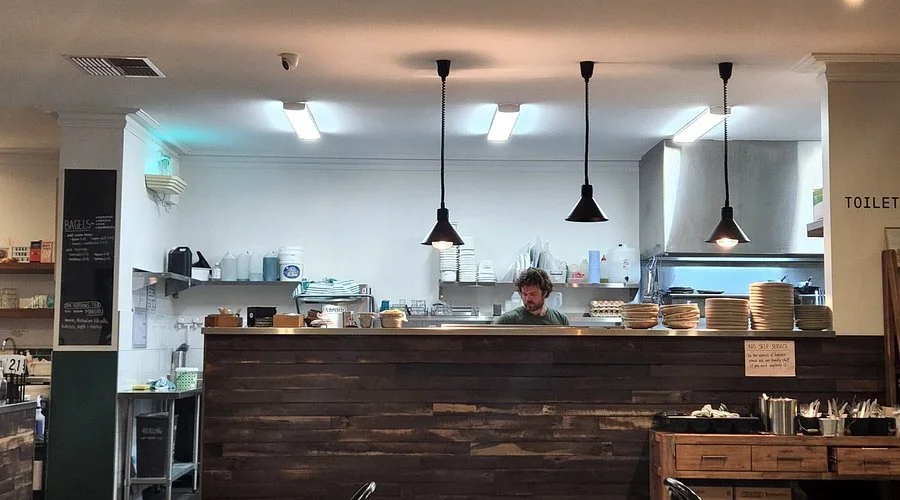
Interior of an Australian café — counter, espresso machine and stool seating
 Café Hub
Decline Patterns · Pre-App Audit · Fitout · Equipment · Cashflow · Home Loan
Why Café Finance Gets Declined in 2026: 8 Lender Red Flags
Quick Answer
Eight patterns cause most café finance declines in 2026. None of them are about your coffee — they're about how your file reads to a credit team that has never walked into your shop.
Café operators assume that a strong trading story means a strong finance file. It doesn't. A credit analyst reads bank statements, a BAS, a supplier quote, a landlord ledger, a merchant statement, and a credit bureau extract — in about twelve minutes, and without meeting you. Where those documents disagree with each other, or arrive in the wrong shape, the file gets declined or shelved long before any underwriter considers the actual business.
Eight patterns account for the majority of those declines. They cut across low doc asset finance, chattel mortgages, invoice finance and One Doc home loans — the four facility types most café owners sequence through between fitout and refinance. Walking a file against these eight checks before submission is the single most useful pre-application audit a café operator can run.
Pattern 1: The fitout quote arrives un-itemised
Un-itemised supplier quotes get declined by asset-finance credit teams because the credit model can't split finance-eligible chattels from building improvements. Portable equipment is chattel (espresso machine, grinder, oven, dishwasher, fridges, POS). Cabinetry, joinery, plumbing works, waterproofing, tiling, electrical upgrades and shopfit are building improvements — they attach to the premises, not to the business. A single line that reads "Fitout — full package $185,000" forces credit to route the whole application into commercial property underwriting, where the café almost certainly doesn't qualify.
The fix is to have the supplier split the quote into two columns, with chattel items (usually 55–75% of the total) on one side and building works on the other. The café fitout documents checklist covers exactly what a lender needs to see on that split.
Pattern 2: Used equipment arrives without proof of value
Second-hand café equipment clears most chattel mortgages — but only when the file carries a dated valuation, a trade-in paper trail or a dealer invoice the credit team can rely on. A private sale of a second-hand Sanremo or La Marzocco with nothing but a bank transfer reference stalls the application, because the credit model can't verify the asset's residual value. Age cutoff, brand tier and installed-ready-for-use evidence all become issues.
Equipment over eight to ten years old, private-party sales with no written invoice, and any machine that can't be evidenced as installed by 30 June (where the instant asset write-off is part of the deal rationale) typically fall out of asset-finance eligibility. Documented dealer sale, serviced log, and serial-number-matched quote fix it.
Pattern 3: The invoice ledger is concentrated in one wholesale account
Invoice finance for cafés with wholesale accounts gets declined when a single debtor makes up too much of the receivables ledger. Most facilities apply a debtor-concentration rule — when one debtor sits above a meaningful share of the total ledger, the funder is effectively exposed to that one counterparty, not to a diversified book. Wholesale-coffee cafés supplying a single corporate canteen, one office building, or a single hotel chain run into this fast.
A mixed ledger — three or more debtors, each below the concentration threshold — fits the facility type. The invoice finance threshold piece walks through exactly which ledger shapes get past the first gate.
Pattern 4: Merchant settlements don't reconcile to the BAS
EFTPOS, Tyro, Square or Zeller settlement totals that don't reconcile to BAS sales lines send the file into a data-integrity review. Credit teams read that mismatch as unreliable reporting — not fraud, not always, but data the analyst can't safely lend against. The most common causes are cash sales not being reported, split providers where only one is summarised, or a mid-year switch of merchant provider without a bridging reconciliation.
A café with clean reconciliation between daily Z-tape totals, weekly merchant settlement summaries and quarterly BAS sales reads as a well-run business. A café with a 20% gap between the two reads as either underreported revenue or overstated BAS — either way, the file stalls.
Pattern 5: ATO payment plan exists but isn't formally lodged
An ATO payment arrangement needs to sit on an ATO business-portal printout with the arrangement reference visible — not in an accountant's email summary. Without the official extract, the credit team treats the debt as unmanaged, and the file falls into bad-credit or specialist lanes rather than mainstream assessment. The March 2026 RBA decision lifted the cash rate to 4.10%, and non-Big-4 lenders passed through +0.25% on variable products from early April 2026 — which tightens servicing headroom on any file already close to a decline trigger, ATO included.
Fixing this pattern is almost always a paperwork exercise. A lodged, current arrangement with no missed instalments is often assessable; a "handshake" arrangement with the ATO is not. The One Doc café ATO debt piece covers how this reads specifically on the home-loan side.
Pattern 6: The landlord ledger shows rent arrears inside six months
Lenders often pull a landlord ledger or request an arrears confirmation for fitout and equipment facilities above a threshold — any rent arrears inside the last six months will typically stall assessment. This pattern catches café operators who caught up on a month of rent at BAS time and treated it as normal cashflow smoothing. From a lender's point of view it's a signal that the operating business can't meet its highest-priority non-finance expense on time, which makes a new finance commitment harder to justify.
Landlord ledgers sit adjacent to the commercial lease and are not normally volunteered by the operator — they get pulled at the lender's request, usually late in assessment, which is why this one surprises people. Twelve months of clean rent payments neutralises it.
Pattern 7: Franchise cashflow is misread as irregular income
Franchise royalty deductions, merchant-fee consolidation and marketing-fund transfers can make a franchisee's bank statements look volatile — a credit model that has never seen franchise patterns before will often misread that irregularity as income instability. The fix for finance sitting on the business side (asset, chattel, invoice) is usually to lay out the franchise structure with the first submission, including a copy of the franchise agreement's fee schedule. For home loans, a One Doc home loan bypasses the pattern altogether by using accountant-signed income rather than bank-statement averaging.
This pattern is the entire reason today's batch includes a dedicated franchisee home-loan post — franchise cashflow reads differently, and the facility type needs to match that.
Pattern 8: The post-restructure ABN gap is too short
A new ABN following a trust restructure, partnership buy-out, or sole-trader-to-company migration needs bridging trading history — without it, the file falls into bad-credit or specialist lanes even when the underlying café is healthy and established. Most lenders want to see at least 12 months of continuous ABN history before a mainstream low doc product is on the table; some will accept 24-month bridged history where the previous entity is clearly linked and supported by the accountant.
The mistake is usually not the restructure itself — it's applying for finance three or four months after the new ABN is issued, before the bridging documentation is in order. The fix is either waiting for the ABN to age, or submitting with a comprehensive accountant's letter linking the old and new entities with matched financials.
The thread across all eight patterns: decline risk is driven by data mismatch and document shape, not café quality. A healthy business with poorly prepared documents fails. A modest business with clean, reconciled, well-structured documents often clears.
Most café finance declines aren't credit decisions — they're pre-application failures the operator didn't know they were making.
Summary
Itemised supplier quotes, documented equipment proof of value, diversified invoice ledgers, reconciled merchant statements, lodged ATO arrangements, clean landlord ledgers, franchise pattern context in the cover letter, and continuous ABN trading history. Fix those eight elements and the same café reads as an approvable file at the same lender.
Most café finance declines are pre-application failures, not credit decisions. The pre-application audit is worth more than any rate-shop.
Running this audit on every café file — before it goes to a lender — is the core of the café loan pack and sits at the heart of the café hub. Brokers and operators who run it land more approvals at better terms, because the lender never has to ask the second question. For a deeper comparison of how café files differ from tradie files at the same lender, the café vs tradie lender differences piece is the companion read. For timing questions around fitout, the café finance approval timeline walks through how long each phase actually takes.
Data note: the ABS Counts of Australian Businesses tracks entries and exits across hospitality — the underlying churn is part of why lenders tighten the pre-application checks above.
Frequently asked
Café finance decline patterns — FAQ
Most café finance declines in 2026 trace to one of eight pre-application patterns: an un-itemised supplier quote, used equipment without proof of value, a concentrated debtor ledger, merchant-to-BAS reconciliation gaps, an unlodged ATO arrangement, rent arrears inside six months, franchise cashflow misread as irregular income, or too short a post-restructure ABN history. The underlying business is usually fine — the file shape isn't. Running the pre-application audit covered in the fitout documents checklist fixes most of these before submission.
Yes — a decline is not permanent. The file can be re-submitted once the underlying pattern is fixed (itemised quote, proof-of-value documentation, updated BAS reconciliation, lodged ATO arrangement, cleared rent arrears). A resubmission to the same lender typically needs a cover letter that explicitly names what changed; a submission to a different lender works better when the new file avoids the original decline trigger altogether. A broker who reads the decline reasons properly usually saves weeks.
No — a lodged, current ATO payment arrangement with no missed instalments is assessable at a range of lenders, including for chattel mortgage and invoice finance products. The file stalls when the arrangement is informal, when instalments have been missed, or when the only evidence is an accountant's email rather than the ATO portal extract with the arrangement reference. Specialist lenders pick up files with active arrangements at different pricing.
They get mis-assessed more often — the decline rate tracks to how the franchise cashflow pattern is presented, not the brand itself. Royalty deductions, marketing-fund transfers and merchant-fee consolidation can all make a statement look volatile when it isn't. A full-doc home loan at a major lender often stumbles on this. A One Doc home loan using accountant-signed income reads past the issue, which is why franchisees tend to sequence into One Doc rather than fight the full-doc model.
Ninety days ahead is the practical minimum. Fitout quotes take time to itemise, equipment proof-of-value paperwork takes time to collect, ATO portal extracts need to be current on the week of submission, and landlord ledgers may need twelve months of clean rent history to fully neutralise an earlier arrears issue. Operators who start the audit alongside the fitout design — not after the supplier quote arrives — have time to fix every one of the eight patterns above. The café finance approval timeline breaks down the full sequence.

 FBAA Accredited
