
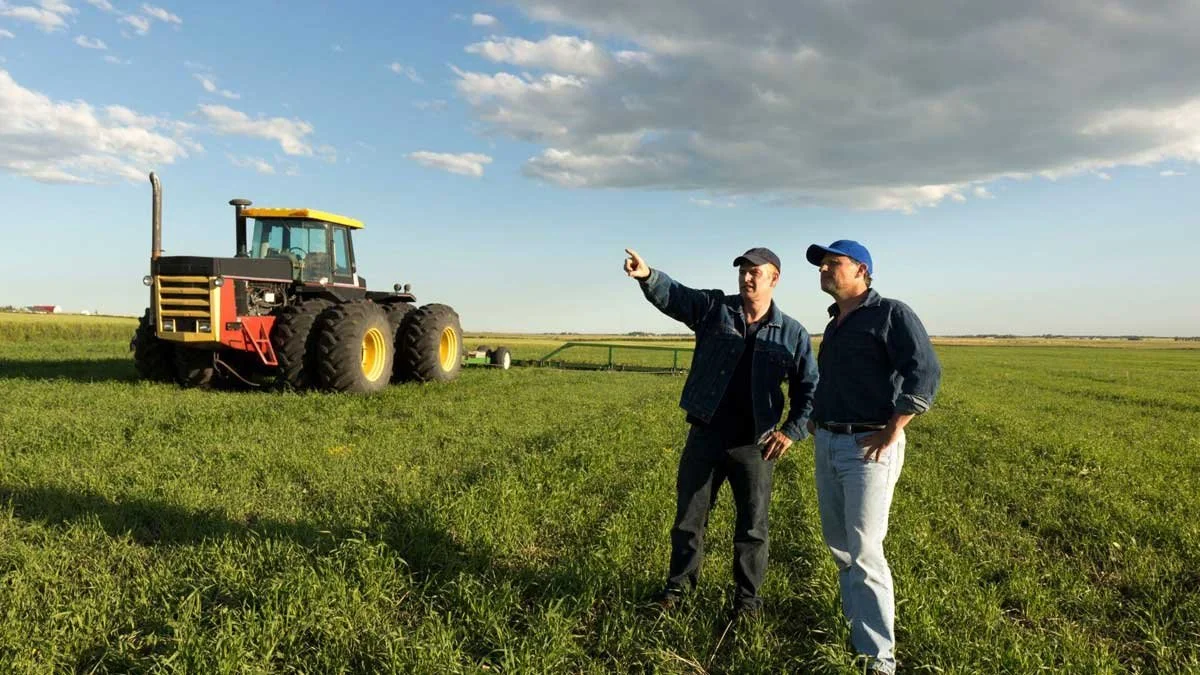
Dealer finance said no on a tractor or header with harvest close? What the decline means, what another lender reads, and the used machine and repayment options.
 Agribusiness
Tractor Finance · Header Finance · Dealer Decline
The dealer's finance arm has said no and the crop will not wait. Here is what that decline means, what a lender outside the dealer reads instead, and how to keep a machine working this harvest.
Quick Answer
When the dealer's finance arm says no, the tractor or header is often still financeable: the decline tells you what one lender's program could not accept, not what every lender will decide. Get the reason, fix what can be fixed, and take one complete file to a lender whose policy fits a farm's season. If a new machine cannot be funded and delivered in time, a used machine, a contract harvester or buying after the harvest income lands are the realistic fallbacks.
Also called: dealer finance declined, tractor finance declined, header finance knock-back.
Why does the dealer's finance arm say no to a tractor or header?
Usually because the file falls outside one narrow program. The dealer's finance arm is usually a captive lender, set up to sell the manufacturer's machines on the manufacturer's terms, and it declines what its credit box was not built for, even when another lender would take the same farm and the same machine.
- A young farming entity. A new company, trust or partnership, or a recent change of structure, can sit below the program's minimum trading time even when the family has worked the same country for years.
- A poor season in the figures. Drought, frost or a late harvest shows up as a dip on the BAS and the bank statements, and a program that reads only the latest months reads the dip as the business.
- The bank's security over the farm. If the farm's bank holds a general security agreement over all the business's assets, a new financier will want its position over the machine settled first, and a captive arm may decline rather than wait for that.
- The machine. On a used unit, its age at the end of the term, its hours or its condition can fall outside the program even when the credit is clean.
- A thin or untidy file. Missing BAS, a tax debt with no payment arrangement on record, or farm and household spending running through one account.
Ask the dealer's finance contact which of these it was. A decline with a reason is a list of things to fix. A decline without one tells you only that this program is closed to the file as it stands. If the no came from your bank rather than the dealer, start with what to do after a vehicle or equipment finance decline.
| Option | When it fits | What it needs | What to watch |
|---|---|---|---|
| Fix the file and go back to the dealer's finance arm | The reason was a gap you can close quickly, such as a missing document or an unexplained dip | The stated reason and the document or explanation that answers it | A second decline from the same program; ask what would change the answer before you resubmit |
| The same machine through another lender | The machine is right and the file is sound, but the program did not fit the farm's structure or season | Statements, BAS, the dealer's tax invoice and the machine's details | A manufacturer offer tied to the dealer's finance arm usually does not come with you |
| A used machine through another lender | A new machine cannot be delivered or funded before the crop is ready | Seller paperwork, a PPSR search, a payout letter if money is owed, and the machine's age at the end of the term | Condition, hours and private sale paperwork |
| Contract harvesting this season, buying after harvest | Nothing can be funded and working in time | A booked contractor and a plan to apply once the harvest income is banked | Contractor availability at peak time; it buys time, not a machine |
Can you still buy from the dealer with finance from another lender?
Yes. You can buy the same tractor or header from the same dealer and fund it through a lender outside the dealer, which pays the dealer at settlement in place of the dealer's own finance arm.
The dealer issues the tax invoice to the borrowing entity, the deposit and any trade-in are shown on it, and the new lender settles the balance directly with the dealer. Selling machines on outside finance is everyday work for a dealership, so tell them early that the money is coming from elsewhere. That keeps the machine held and the delivery slot before harvest in your name. What to say about the order and any deposit already paid is covered in our insight on equipment finance declines.
What you can lose is the manufacturer's own offer. A subsidised rate, a deferred first payment or a seasonal repayment program is normally tied to the dealer's finance arm and does not travel with the machine. Compare the whole cost and the repayment shape rather than the headline offer, and see how dealer finance and the other routes compare in our farm equipment finance guide.
What does another lender look at on a farm file after a decline?
Another lender reads the whole season rather than the latest months: the business bank statements across the year, the BAS, what the last harvest returned, the bank's position on the farm's assets, and the machine you want to buy.
- Statements and BAS. Smaller amounts can often be assessed on recent business bank statements, while bigger ones usually add BAS and the ATO portal.
- The season behind the figures. Explain a dip before the file goes in, not after a second decline: last season's figures, delivery or forward contracts, and a short letter from your accountant setting out what happened.
- The bank's position. Where the farm's bank holds security over all present and after-acquired property, we check at the start how the new lender's security over the machine will rank and whether the bank's consent is needed, because the bank's reply can take longer than the credit decision.
- The machine. Make, model, year, hours, serial number and the seller's details, so the lender can value it.
The decline does not need hiding. Another lender will usually ask, and a straight answer with the reason and what has changed reads better than a file that seems to come from nowhere. How an application shows on your file is covered in what a declined loan does to your credit file.
How we work a dealer declineWe start with the reason, not the application form. We read the last season through the statements and BAS before anything is submitted, and we write the explanation for a dip with you and your accountant. We check whether the farm's bank holds security that could reach the machine and settle how the new lender will rank before the file goes in. Then we put one complete file to a lender whose policy fits the farm's structure and the machine, through equipment and asset finance, rather than spreading enquiries across several lenders. If the new machine cannot be funded in time, we say so early and work through a used machine or a later purchase with you.
Can a used tractor or header get you through this harvest?
Often, yes. A used machine that is on the ground now can be inspected, financed and working before a new one could arrive, as long as it passes the lender's age test and the seller can produce clean paperwork.
- Check the age at the end of the term. Lenders measure how old the machine will be when the last repayment falls due, so a shorter term can bring an older header inside policy.
- Search for money owing. Run a PPSR search on the serial number before you pay anything, and if finance is registered, get a payout letter so it is cleared at settlement.
- Get the seller's paperwork. A dealer provides a tax invoice; a private seller needs proof of ownership, identification and bank details, and the lender may want photos or an inspection.
- Line up finance before a clearing sale. Clearing sale terms usually want payment on the day or soon after, so have the approval in place before you bid.
The detail on age limits, machine hours and clearing sales is in our guide to financing used and aged equipment.
Can repayments still fit around the harvest?
Yes, though usually not on a seasonal schedule. Seasonal and annual repayment programs are mostly a bank and manufacturer feature, and no lender on our panel documents one for farm machinery, so on our route the season is handled in how the loan is set up.
- A deposit from the last harvest. It lowers the amount the lean months have to carry.
- A balloon at the end of the term. A balloon payment lowers the regular repayment; check when it falls due against your harvest, because it has to be paid or refinanced then.
- Repayments sized to the lean months. Weekly, fortnightly or monthly repayments set at what the farm can carry in its quietest months, not its best.
- Ask before you sign. If a seasonal pattern matters to the farm, raise it before anything is signed. Never assume it.
How the main structures work on a tractor or header is set out in the repayment structures for farm machinery.
What happens if the harvest cheque is late?
Talk to the lender before a repayment is missed, not after. Machinery finance is not built to flex with the season, so a late cheque is usually a working capital question, and our seasonal farm finance guide covers the facilities designed for it. If the farm's bank is already pressing for repayment, read about farm debt mediation first.
What should you have ready the week before harvest?
Have every document a second lender will ask for on the first day, so the time goes into the credit decision rather than into chasing paperwork.
- The decline reason, in writing or noted from the call, and what has changed since.
- Business bank statements and your latest BAS, with last season's financials if a dip needs explaining.
- The machine: the dealer's tax invoice or quote, or the private seller's details, with the serial number and hours.
- Your bank's contact for any consent over the machine.
- Insurance ready to start at settlement, noting the financier's interest.
- The entity details: ABN, GST registration, and who will sign and guarantee.
What cannot be rushed?
An inspection or valuation on a used machine, the bank's reply on its security, and a private seller's payout all run on other people's time. Start those first, and start them together.
What if nothing can be funded before the crop is ready?
Then the workable plan is to get this crop off another way and buy the machine after harvest: book a contract harvester, hire, or come to an arrangement with a neighbour, and apply once the harvest income is in the statements. How timing an application around peak income changes the assessment is covered in the harvest window application plan.
When you are ready, check eligibility to see where your file sits, or talk to us about the machine and the date it needs to be working.
A dealer finance decline closes one program, not the purchase. Get the reason, explain the season, raise the bank's security early and take one complete file to a lender whose policy fits a farm. If a new machine cannot be funded in time, a used one, or getting this crop off another way and buying after harvest, keeps the farm moving.
Key takeaway: ask why the dealer's finance arm said no before you apply anywhere else, then choose between this machine, a used one and buying after harvest while there is still time to choose.Frequently Asked Questions
The dealer or lender will not fund that machine on that file, but nothing stops you applying elsewhere. The application may show as an enquiry on your credit file, and what a declined loan does to your credit file covers how that is recorded. Ask for the reason, fix what can be fixed, and make the next application one complete file to a lender whose policy fits a farm.
There is no single published minimum score for business machinery finance. Each lender reads the score alongside the farm's statements, the season behind them, any tax or bank arrears and the machine itself, so a clean, well explained file with a modest score can still find a lender where a higher score with gaps does not. We check the file before it goes in.
The easiest machine to finance is one a lender can value and resell: a recognised make and model, an age that stays inside the lender's limit at the end of the term, a known history, and a seller who can supply a tax invoice or clean private sale paperwork. A newer used tractor from a dealer is usually simpler to finance than an old one bought privately.
Ask the dealer's finance contact why it was declined, then fix that point before you apply again: explain a poor season with last year's figures and an accountant's letter, sort out the bank's security over the farm, or choose a machine that fits the age limit. Then make one complete application to a lender whose policy fits. Whether to go back to the same lender is covered in how long to wait before reapplying.
Often, if you move quickly and stay flexible on the machine. A used header that is already available can often be inspected and financed sooner than a new one can be delivered, and the same file can go to another lender while the dealer holds the machine. If nothing can be funded in time, a contract harvester gets this crop off and the purchase moves to after harvest.

 FBAA Accredited
