
Factory Install Readiness (2026): Power, Slab, Access & Commissioning
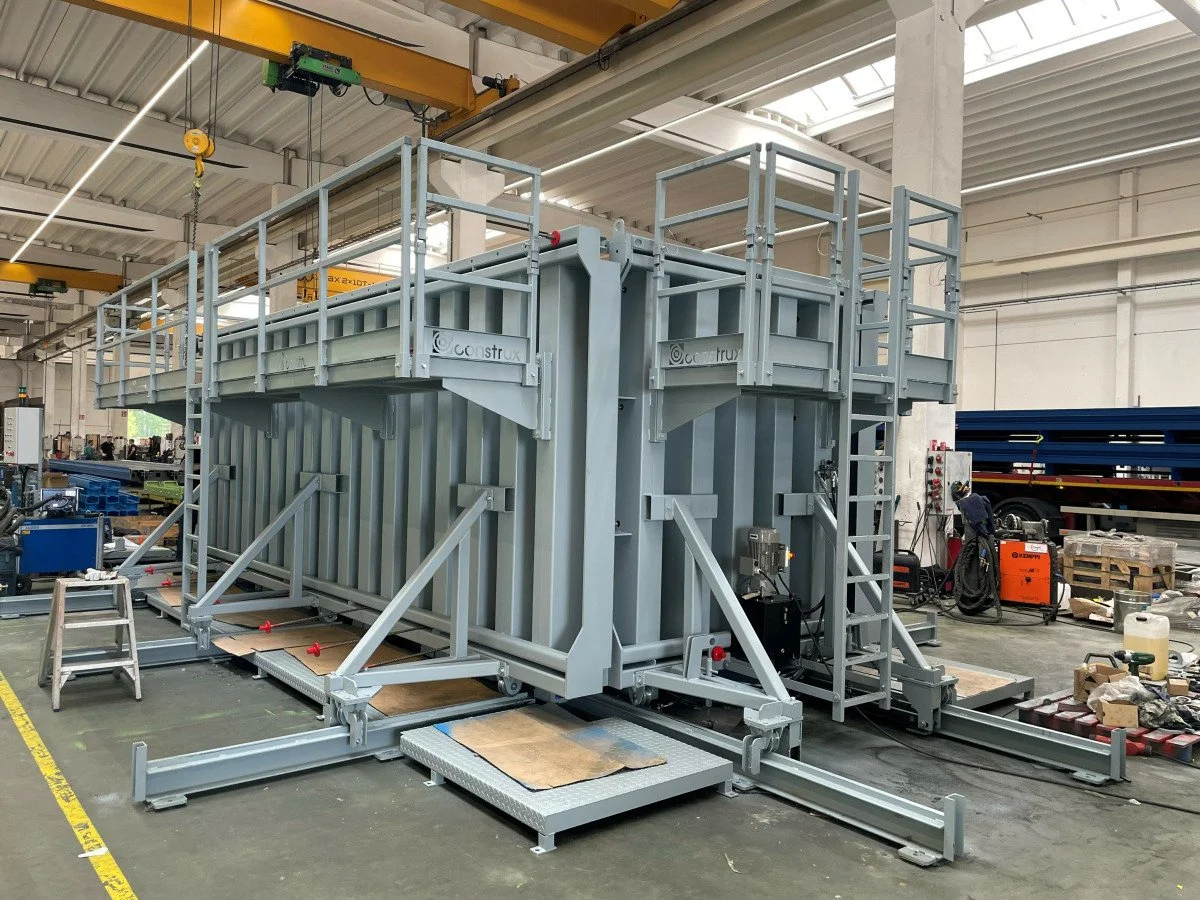
Industrial factory floor showing heavy machinery installation
 Insights · Manufacturing Finance
Factory Install Readiness (2026): Power, Slab, Access & Commissioning Gaps That Delay Plant Funding
This post covers a narrow but frequently costly problem in manufacturing plant finance: conditional approval is confirmed, the machine is ready to ship, and settlement stalls — not because the credit file is wrong, but because the site is not ready to receive the equipment. Based on manufacturing files processed through Switchboard Finance's Melbourne manufacturing lane, these are the 11 physical site gaps that trigger follow-ups, valuations, or outright delays between approval and funded settlement.
Most Plant & Equipment finance delays between conditional approval and settlement are not credit problems — they are site problems. Lenders need to confirm the financed asset can be installed, commissioned, and used for the stated purpose before funds are released. When power supply, floor loading, rigging access, install contractor availability, or commissioning timelines are unresolved at the point of approval, the file pauses.
This is separate from the docs the lender needs to assess the business — the Manufacturing Equipment Finance Documents Checklist (2026) covers that. This post covers the physical site and install conditions that affect whether settlement can proceed once the credit decision is made.
1) The 11 site-readiness gaps — grouped by category
Each gap below represents a physical or operational condition that, when unresolved at the point of conditional approval, creates a hold between approval and Settlement. Some are triggered by the lender's valuer; others surface when the install contractor confirms scope. All of them are avoidable with a 2–4 week pre-order site check. For the approval timeline itself, the Factory Plant Finance Approval Timeline (2026) maps the stages from submission to settlement.
Gap 1 — Three-phase supply is not available at the machine's planned location
CNC machines, laser cutters, injection moulding equipment, and most industrial compressors require three-phase power. Single-phase is not a workaround — it is a hard stop. If the factory has three-phase at the switchboard but not at the planned install bay, an electrical upgrade is required before the machine can operate. That upgrade is a separate cost, typically $3,000–$15,000 depending on cable run distance, and it is not usually bundled into the equipment finance. See how bundled costs work in the Factory Upgrade Pack (2026).
Lenders ask about power adequacy when the quoted machine draws more than 15–20 kW. If the site cannot confirm supply, settlement holds pending an electrical contractor scope.
Gap 2 — Switchboard capacity is insufficient for the machine's peak draw
Even with three-phase available, the existing switchboard may not have the spare capacity to add a new machine circuit. If the factory is already running near switchboard capacity — common in older industrial buildings in Geelong, Dandenong, and western Melbourne — the machine install cannot proceed until a switchboard upgrade is scoped and approved by a licensed electrician. This is a compliance and safety requirement under AS/NZS 3000 Wiring Rules, not a lender preference.
Gap 3 — No slab certification or structural engineer sign-off for the machine's footprint weight
Large plant — press brakes, horizontal machining centres, industrial washers, food processing lines — can weigh 5–25+ tonnes. Lenders financing equipment above a threshold weight (which varies by panel, but often starts around 3–5 tonnes) will ask for confirmation that the floor can support the load. Without a structural engineer's report or the building's original slab specification, this confirmation cannot be provided and the valuer cannot complete the site assessment.
Getting a structural engineer on site typically takes 1–3 weeks to schedule and costs $800–$2,500. Starting that process at the time of application — not at conditional approval — saves 2–3 weeks of delay.
Gap 4 — Anchor bolt or hold-down requirements conflict with the existing slab thickness
Machines that vibrate under load — presses, grinders, stamping equipment, large lathes — typically require anchor bolts drilled into the slab to prevent movement. If the slab is thinner than the machine's anchor specification (or if it is a suspended slab rather than ground-bearing), the install contractor cannot complete the hold-down and the machine cannot be commissioned. This is discovered at the install stage, not the approval stage — but it creates a funded-but-not-operating scenario that some lenders treat as a settlement condition unmet.
Gap 5 — No confirmed rigging contractor and no access plan for delivery
Machinery Finance settlement is triggered when the asset is delivered and installed, not just when the quote is accepted. If there is no confirmed rigging contractor at the time of settlement coordination, the lender's process pauses. Rigging companies in metro Melbourne and Geelong are booked 3–8 weeks out for large lifts. Leaving the rigging booking until after approval is confirmed is the single most common cause of a 4–6 week gap between "approved" and "funded."
Gap 6 — Factory door, ceiling height, or aisle width cannot accommodate the machine's dimensions
Large equipment often arrives in sections, but some machines — wide-format flatbed routers, large injection moulding machines, industrial ovens — arrive as a single unit requiring clear access from the delivery point to the install bay. If the factory's roller door clearance, ceiling height, or aisle width is below the machine's delivery dimensions, access modifications are required before delivery can proceed. This is a physical constraint that cannot be solved by finance structure.
Metal fabrication business in Campbellfield, conditional approval on a press brake in 4 days. Rigging contractor confirmed 6 weeks out. Lender's settlement window was 30 days from conditional. We flagged it the week of application, not after approval — the business owner locked a rigger the same day the application went in. Settled on day 22.
Gap 7 — Supplier commissioning lead time extends beyond the lender's settlement window
Many lenders have a 30–60 day window between conditional approval and funded settlement. For imported or custom-built machines, the supplier's commissioning engineer may not be available within that window — particularly for equipment from European or Asian manufacturers where technician scheduling runs 6–12 weeks out. If commissioning cannot be confirmed within the settlement window, the lender may require an extension, a progress payment structure, or in some cases a re-assessment. The Long-Lead Machinery Funding Timeline (2026) covers how to structure the facility around these gaps.
Gap 8 — Production downtime during install conflicts with the business's peak revenue period
This is an operational gap, not a lender gap — but it affects the finance structure. A business that finances a machine scheduled for install during its peak production quarter (EOFY, Christmas run, a contracted production window) faces revenue interruption exactly when cashflow needs to absorb new repayments. The better structure is to time the install during a shoulder period and hold a Working Capital buffer for the commissioning phase. This is a cashflow planning issue, not a site readiness issue, but it is regularly overlooked until the install date is set.
Gap 9 — Machine requires a WorkSafe risk assessment or guarding certification before it can operate
Under Work Health and Safety Act 2011 obligations, certain classes of plant — presses, guillotines, robotic arms, elevated work platforms, pressure vessels — require a formal risk assessment and guarding certification before first operation. If this is not arranged prior to commissioning, the machine cannot legally be operated. Some lenders financing regulated plant will ask for confirmation that a risk assessment is underway as a condition of settlement. The cost of this process ($500–$3,000 depending on complexity) is generally not financeable and must be budgeted separately.
Gap 10 — Operator training is not scheduled and the machine cannot be operated on delivery
For CNC, robotic, or specialist industrial equipment, operator training is often mandatory under the supplier's warranty terms and sometimes under the relevant WHS regulation. If training is not booked at the time of install, the machine may be commissioned but not operational — meaning the CAPEX is live (repayments have started) but the machine is not yet producing. This is a planning gap, not a finance gap, but it affects the real cashflow timeline for the first 4–8 weeks after settlement.
Gap 11 — The commercial lease requires landlord consent for fixed plant and that consent is not obtained before settlement
Most commercial leases include a clause requiring landlord consent before fixed plant is bolted, anchored, or hardwired into the premises. For equipment that is physically attached to the building — compressed air lines, CNC anchor bolts, fixed conveyor systems, integrated refrigeration — failing to obtain landlord consent before install can put the lease at risk and create a title dispute around the equipment itself (is it a fixture or removable asset?). Lenders financing fixed plant will sometimes ask for a copy of the lease and confirmation that consent has been or will be obtained. If the lease is silent on the issue, a written confirmation from the landlord is the cleanest resolution.
Food manufacturer in Dandenong South, CNC packaging line, conditional approval in 3 days. Two weeks later the valuer flagged that the line required permanent compressed air installation and the lease required landlord consent for fixed services. The landlord took 11 days to respond. Settlement delayed by 13 days for what was a one-page letter. The consent request should have been sent the week the application went in.
2) When site readiness becomes a lender question — the 4 scenarios that trigger a hold
Not every plant finance deal generates site-readiness questions. A freestanding CNC router on a standard commercial slab with single-phase power will settle without a site visit. The questions arise when one or more of the following conditions is present.
| Scenario | What triggers the hold | Typical delay | Pre-emption move |
|---|---|---|---|
| Heavy equipment (3+ tonnes) | Valuer requests slab spec or structural sign-off before completing the site report | 1–3 weeks (structural engineer scheduling) | Commission structural report at the time of application, not after approval |
| Regulated plant class | Lender or valuer flags that the asset class requires pre-operation certification (WHS, pressure vessel, guarding) | 2–4 weeks (risk assessment + certification scheduling) | Confirm certification plan in writing before the machine is delivered — include it in the site readiness note to the broker |
| Fixed or embedded installation | Lease review reveals landlord consent required; or valuer flags title risk if machine is affixed to premises | 1–2 weeks (landlord response time) | Send the consent request the same week the finance application is submitted |
| Import or long-lead supply | Commissioning window falls outside the lender's 30–60 day settlement timeline | Variable — depends on supplier lead time (can be 6–16 weeks) | Structure the facility around the actual delivery date, not the application date. See Long-Lead Machinery Funding Timeline (2026) |
3) The pre-delivery confirmation — what to lock in before the machine leaves the supplier
The best time to resolve site readiness is 3–6 weeks before the application goes in — or at the very least, the same week the application is submitted. The following confirmations should be in hand before the credit team asks for them, not after.
- Power supply confirmed by a licensed electrician: Written confirmation that three-phase supply exists at the install location and the switchboard has capacity for the machine's peak draw. This takes 1–2 hours of an electrician's time and costs very little to obtain.
- Floor load capacity confirmed: Either the building's original slab spec (from the landlord or council permit records) or a structural engineer's written assessment. For machines under 3 tonnes on a standard commercial slab, this is often not required — but for anything heavier or with significant vibration loads, confirm it early.
- Rigging contractor booked and confirmed: A written booking from a licensed rigging company, with a confirmed delivery date and access plan. This should happen before conditional approval is received — not after.
- Landlord consent obtained or lease reviewed: If the machine is fixed, anchored, hardwired, or connected to building services, the lease should be reviewed for consent clauses. If consent is required, the request should be with the landlord before the application is submitted.
- Commissioning engineer availability confirmed: For imported or complex machines, get a written confirmation from the supplier that a commissioning engineer will be available within the lender's settlement window. If the timeline is tight, flag it with the broker at application stage — not at day 28 of a 30-day settlement window.
- WHS / regulatory compliance path identified: If the asset class requires pre-operation certification, identify who is doing the risk assessment and when it will be completed. Include this in the site readiness note accompanying the application.
These confirmations do not need to be formal documents at application stage. A short written note from the business owner summarising the site status — power available, slab adequate, rigging booked, landlord consent in progress — is enough to prevent most hold requests. It demonstrates to the assessor that the installation is planned, not speculative. For the full Approval Criteria picture across documents, timelines, and site conditions, the Victoria Manufacturing Business Loans guide covers the full facility landscape.
Plastics manufacturer, Altona North, financing a used injection moulding machine from a local auction. Conditional approval came through in 48 hours. Then the valuer visited and found: no three-phase at the planned bay (the machine's previous location had it; this site did not), no structural assessment for a 9-tonne machine, and no rigging plan. The file sat for 19 days while each item was resolved. All three gaps were identifiable in a 30-minute pre-application site walk. The machine was ready. The site was not.
The 11 gaps in this post all share the same root cause: the machine is ready before the site is. Power supply, slab capacity, rigging access, landlord consent, commissioning availability and compliance certification are all resolvable — but only if they are identified before the approval clock starts, not after it.
For the approval document pack, see the Manufacturing Equipment Finance Documents Checklist (2026). For how the approval stages run once the file is submitted, see the Factory Plant Finance Approval Timeline (2026). For the full manufacturing finance pathway, start at the Business Owners Finance Hub.
FAQs
Quick answers for manufacturers planning plant upgrades in 2026.
Hubs first. Then the newest reads.
- Business Owners Finance HubCashflow facilities + SME pathways
- Tradie HubVehicles, tools, civil + low doc packs
- Truckie HubOwner-driver finance + compliance packs
- Whitecoat HubClinics, fitouts + specialist approvals
- 7 Balloon & Payout Traps SME Service-Van Fleets Hit When Upgrading (2026)The stagger plan that stops 3 loans maturing in the same quarter
- Business Vehicle Refinance Eligibility Scorecard (2026)14 checks to run before you request a payout figure
- South East Melbourne Tradie + Civil Plant Finance Checklist (2026)VIC proof pack for faster low doc approvals
- Performance Bonds & Bank Guarantees (2026)The approval rules civil contractors trip over
- Ute Fitout Finance Approval Traps (2026)Seven traps that slow approvals (and how to avoid them)
- Ute Fitout Finance Quote Checklist (2026)What to itemise so it doesn't trigger re-quotes
- Factory-Fit vs Aftermarket Van Fitout Finance (2026)Which quote lines count, which get haircut, and which trigger a deposit
- Ballarat & Western Victoria Tradie + Civil Finance Checklist (2026)Local proof pack for utes, minis, trailers and site-ready add-ons

 Accredited Member
