
Manufacturing Equipment: Lease vs Rental vs Chattel vs CHP
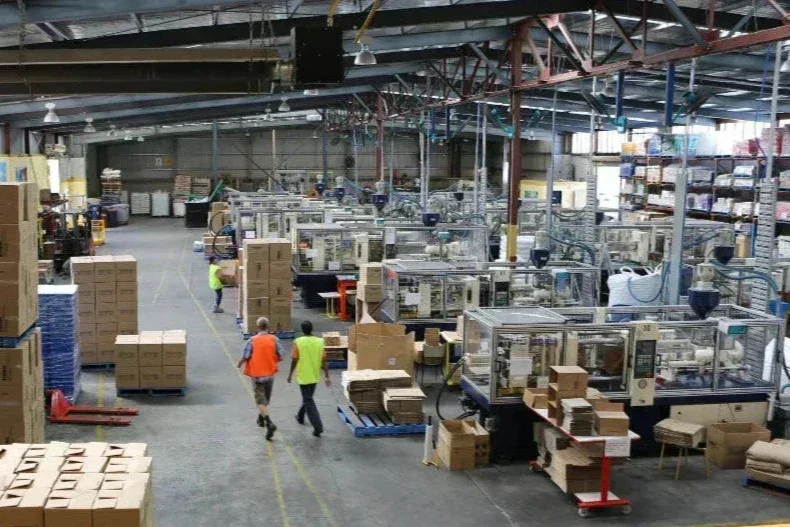
Lease vs rental vs chattel mortgage vs commercial hire purchase for manufacturing equipment — Switchboard Finance
 Manufacturing Hub
Lease · Rental · Chattel Mortgage · Commercial Hire Purchase
Manufacturing Equipment: Lease vs Rental vs Chattel vs CHP
Four structures, four very different tax, ownership and cashflow profiles. For most Australian manufacturers buying production plant in 2026, chattel mortgage is the default — but the other three each have a narrow window where they genuinely beat it.
Quick Answer
For most manufacturers buying plant in 2026, a chattel mortgage is the default structure — ownership from day one, the full GST credit in your next BAS, and a clean depreciation schedule. Finance lease, Commercial Hire Purchase (CHP) and operating rental each suit narrow situations: short-hold fleets, off-balance-sheet treatment, or equipment you expect to return rather than own at maturity.
The Four Structures at a Glance
There are effectively four ways Australian manufacturers finance production plant: chattel mortgage, finance lease, Commercial Hire Purchase (CHP) and operating rental. They differ on who owns the asset during the term, when the GST credit is claimed, how depreciation flows through the P&L, and what flexibility you have if your needs change mid-term. The matrix below summarises the differences across a typical 5-year term on a CNC machine, injection moulder, press brake or production line.
Before walking through each structure in detail: every one of these is business-purpose asset finance, not consumer credit. That means faster approvals, more low-doc flexibility, and no consumer protection framework. The tax outcomes below are how the structures typically work — your accountant should confirm how they apply to your specific entity, cashflow and equipment. See the manufacturing finance hub for the full picture of how these sit alongside machinery finance and working capital facilities.
Chattel Mortgage: The Default for Most Manufacturers
A chattel mortgage is the structure most manufacturer equipment loans default to in 2026. You own the machine from settlement, the lender registers a security interest on the PPSR, and you claim the GST credit on the full purchase price in your next BAS. You depreciate the asset from day one on your own depreciation schedule, and you can refinance or sell the machine whenever you choose because it's legally yours.
The interest component of each repayment is tax deductible, and the capital component reduces your loan balance. Because ownership is yours, a balloon payment of 0–50% is typically available — letting you dial monthly repayments up or down based on how hard the machine earns its keep. On a $400,000 CNC set at 20% balloon over 5 years, the balloon sits at $80,000 at maturity, payable from cashflow, trade-in equity, or a refinance.
Stronger fit when…
- You plan to keep the machine 5+ years
- You want the full GST credit in this BAS period
- You need flexibility to refinance or sell mid-term
- Cashflow improves with depreciation deductions on your P&L
- The machine underpins a core production process that won't move
Gets trickier when…
- You upgrade equipment on a 2–3 year cycle (the changeover friction adds cost)
- You want the rental payments fully deductible as operating expense
- Your accountant wants lease treatment to manage covenant ratios
- The asset has a high residual but short useful life in your operation
- You don't want the machine on your balance sheet
Chattel mortgage is explicitly built for plant owners, and for most manufacturers using equipment as a long-term production asset, it's the starting point. For the capex timing specifically, see FY26 EOFY chattel mortgage timing for manufacturing equipment — settlement before 30 June affects which year the depreciation deduction lands in.
Finance Lease: When Rental Treatment Earns Its Keep
A finance lease is a structured rental. The lender buys the machine, you rent it for a fixed term (typically 3–5 years) with a residual payment at the end set within the ATO's minimum residual guidelines. You don't own the asset during the term — the lender does — and you don't depreciate it on your books. What you do claim is the full rental payment as a deductible expense, which simplifies your P&L and aligns closely with how the machine is actually being used.
The GST on a finance lease applies to each monthly rental, not to the purchase price upfront — so there's no single large BAS claim at settlement. Over the term, the total GST claimed can be similar to a chattel mortgage, but the timing is spread out. At maturity, you have three options: pay the residual and keep the machine, refinance the residual, or return it and sign a new lease on replacement equipment.
Finance leases are more common on equipment with predictable depreciation curves and clear residual markets — think standard CNC machines, injection moulders, commonly-specced press brakes. For bespoke or heavily-modified plant, the lender's residual risk is harder to price and lease rates tend to creep up. The ATO's guidance on depreciation and capital allowances sets out how lease payments are treated for manufacturing assets, which differs materially from chattel mortgage treatment.
One practical note: under AASB 16 (the Australian leases accounting standard), most finance leases now appear on your balance sheet as a right-of-use asset and a lease liability. The days when finance leases were a reliable off-balance-sheet vehicle ended in 2019 — if your accountant is still treating new finance leases as off-balance-sheet, that needs a review.
Commercial Hire Purchase: Ownership Deferred to the End
Commercial Hire Purchase (CHP) is structurally the closest cousin of chattel mortgage. The lender owns the machine during the term and hires it to you — but unlike a lease, ownership automatically transfers to you on final payment. You claim the full GST credit on the purchase price upfront in your next BAS (same as chattel mortgage), you depreciate the asset on your schedule from settlement, and the interest component of each hire payment is tax deductible.
The main practical difference from a chattel mortgage is what happens if you want to refinance mid-term. Under a chattel mortgage, you already own the asset and can refinance with any lender. Under CHP, you need to first pay out the existing facility, have the lender transfer ownership, and then set up a new arrangement — a 2–3 week process with discharge fees attached. For operators who expect to hold the machine to term and don't anticipate refinancing, CHP and chattel mortgage deliver near-identical economics. For operators who may want to restructure if rates shift, chattel mortgage is cleaner.
CHP is the older of the two structures (chattel mortgage replaced it as the mainstream option after GST reform). You'll still see CHP quoted by some equipment dealers — particularly those with long-standing dealer finance panels. If you're offered CHP, compare the rate and structure against a straight chattel mortgage from the same broker panel before committing. See the structure alongside the rest of the equipment finance stack, or the detailed breakdown in cash vs finance for manufacturing equipment.
Operating Rental: When You're Not Keeping the Machine
An operating rental is finance for equipment you expect to return, not own. The lender (or rental house) keeps ownership for the life of the asset, you pay a rental that covers their capital plus a return, and at maturity you hand it back and sign a new rental on upgraded equipment. The full rental payment is tax deductible, GST applies to each rental (not upfront), and the asset typically does not sit on your balance sheet in the way a chattel mortgage or finance lease does.
Operating rental earns its keep in three specific scenarios for manufacturers. First, short-cycle technology where upgrading every 2–3 years is genuinely rational — certain laser cutters, 3D printing systems, and measurement equipment fit this. Second, project-specific equipment where you need a machine for a 12–24 month contract but not beyond. Third, equipment where you actively want off-balance-sheet treatment for covenant or gearing reasons (speak to your accountant — AASB 16 narrows this in many cases).
For most production plant with a 7–15 year useful life, operating rental is the wrong structure. You end up paying a rental premium for flexibility you never use, and at maturity you return an asset you could have owned. If you're considering operating rental on a long-life production machine, the maths usually falls over once you total the rentals across the expected hold period — see cash vs finance for manufacturing equipment for the comparison framework, or used machinery finance for manufacturing for how residual values compress on second-hand plant.
How the ATO and Your Balance Sheet Treat Each
The structural differences above translate into three different tax outcomes and two different balance sheet outcomes. Under chattel mortgage and CHP, you own the asset (immediately or at maturity) and claim depreciation plus interest. Under finance lease and operating rental, the lender owns the asset and you claim rental payments as a deductible expense. The ATO's depreciation and capital allowances guidance is the primary reference — your accountant will map the structure you choose to your specific entity type and revenue profile.
One common trap: manufacturers sometimes pick finance lease or operating rental for the deduction profile, not realising that the lease rental is higher than what chattel mortgage interest plus depreciation would total across the same term. Over 5 years on a $400,000 asset, the total cost differential can be 3–8% depending on the residual structure — meaningful on a production-line purchase. Run the numbers both ways before committing. If you want a broker to model the two side-by-side, talk to a broker with the quote, depreciation rate and residual values in front of you.
For the broader capital stack — equipment, working capital, property — see the manufacturing loan pack which sequences facilities so each structure earns the right role. The machine-specific posts that complement this decision are manufacturing equipment finance in Melbourne, used machinery finance, imported machinery finance (landed cost vs valuation), and long-lead machinery funding timelines.
For most Australian manufacturers buying production plant in 2026, chattel mortgage is the default. You own the asset, claim the full GST credit in your next BAS, depreciate from day one, and retain refinance flexibility. Commercial Hire Purchase delivers near-identical tax outcomes but defers ownership to the final payment — fine for a hold-to-term strategy, less flexible mid-term. Finance lease earns its keep when you want full rental deductibility and a set residual strategy on standard-market equipment. Operating rental is the right structure only when you genuinely plan to return the machine — short-cycle tech or project-specific plant.
Key takeaway: pick the structure that matches how you'll actually use the machine — not the rate alone. The wrong structure costs more over 5 years than a 0.5% rate difference.Frequently Asked Questions
Under a chattel mortgage, the manufacturer owns the equipment from settlement — the lender registers a security interest on the PPSR and releases it when the loan is paid. The manufacturer claims the full GST credit on the purchase price in the next BAS and depreciates the asset on their own schedule. Under a finance lease, the lender owns the equipment throughout the term and rents it to the manufacturer. The full rental payment is tax deductible, GST applies to each rental rather than the purchase price upfront, and the manufacturer does not claim depreciation. For long-hold production plant, chattel mortgage is the mainstream choice. For equipment with a defined return or residual strategy, finance lease can earn its keep. See the manufacturing finance hub for the full structural landscape.
Commercial Hire Purchase (CHP) and chattel mortgage deliver near-identical tax outcomes — full GST credit upfront in the BAS, depreciation from settlement, and interest deductible over the term. The structural difference is who legally owns the equipment during the term. Under a chattel mortgage, the manufacturer owns the machine and the lender holds a security interest. Under CHP, the lender owns the machine and hires it to the manufacturer, with ownership transferring on the final payment. This matters if the manufacturer wants to refinance mid-term: chattel mortgage allows immediate refinance with any lender because the manufacturer already owns the asset, while CHP requires paying out the existing facility and transferring ownership first — typically a 2–3 week process with discharge fees. For a hold-to-term operator, the two structures are effectively interchangeable. See chattel mortgage for the mainstream structure, or read the detailed FY26 EOFY chattel mortgage timing piece for end-of-financial-year considerations.
For most manufacturers buying a CNC machine they intend to run for 7–15 years, chattel mortgage is the stronger structure. CNC machines have long useful lives, strong residual values, and are typically core production assets — the ownership, upfront GST credit, and depreciation flow of a chattel mortgage all work in the manufacturer's favour. Operating rental makes sense only when the CNC is being used on a specific short-term contract, when the technology is expected to be superseded within 3 years, or when the manufacturer has a specific reason to keep the asset off balance sheet (speak to your accountant about AASB 16 implications first). Across the typical 5-year CNC hold period, operating rental total cost usually exceeds chattel mortgage total cost by 3–8% because the rental premium compensates the lender for residual risk they never actually bear. See cash vs finance for manufacturing equipment for the full comparison framework and manufacturing equipment finance in Melbourne for the broker-view on typical terms.
Yes, but the timing differs from a chattel mortgage. Under a finance lease, GST applies to each monthly rental rather than to the purchase price upfront — so there's no single large BAS claim at settlement. Over the full lease term, a GST-registered manufacturer claims the GST back on each rental as it's paid. Under a chattel mortgage or Commercial Hire Purchase, the full GST credit on the purchase price lands in the BAS period of settlement — which can deliver a five or six-figure cashflow benefit in the weeks after the machine is installed. For manufacturers tight on cash in the settlement quarter, that upfront GST timing is often the single biggest reason chattel mortgage wins the structural decision. The ATO's depreciation and capital allowances guidance is the primary reference for how each structure is treated — confirm the specifics with your accountant before settlement.
For a 5-year chattel mortgage on manufacturing equipment, a balloon of 15–25% of the purchase price is the typical sweet spot. On a $400,000 press brake, that puts the balloon at $60,000–$100,000 at maturity — small enough to pay out from cashflow, refinance into a new term, or clear on sale. Balloons above 35% on a 5-year term can leave the balloon close to the machine's market value at maturity, which narrows your exit options if the resale market softens. Balloons below 10% push monthly repayments higher — useful if the machine is depreciating fast and you want principal paid down quickly. The right balloon depends on the asset's expected residual value at maturity, your monthly cashflow, and whether you plan to refinance at the balloon or sell the machine. See residual and balloon in the glossary for the mechanics, and long-lead machinery funding timelines for how settlement timing affects the term structure.

 FBAA Accredited
