
Melbourne Refrigerated Transport Finance (2026)
Melbourne refrigerated transport finance for owner-drivers adding fridge vans, rigids or refrigerated trailers – Switchboard Finance
 Insights · Truckie Hub
Melbourne Refrigerated Transport Finance (2026): The Cold-Chain Approval Checklist for Owner-Drivers Adding Fridge Vans, Rigids or Refrigerated Trailers
Refrigerated transport files get judged differently from standard truck or van deals. The lender is not just looking at the base vehicle. They are also looking at the refrigeration unit, the Truck Body Fit-Out, quote detail, usage pattern, contract proof and whether the cold-chain setup will hold value cleanly under Asset Finance. Nick Lim is an FBAA accredited broker at Switchboard Finance, and this page is the Melbourne-specific checklist for truckers, owner-drivers, transport and logistics businesses adding temperature-controlled gear.
Refrigerated truck finance usually slows down when the quote does not separate the base vehicle from the cooling unit and body, when the operator cannot show cold-chain work clearly, or when the lender sees specialty-body valuation risk. Start with the Truckie Hub, then read the hero explainer Low Doc Truck Finance 2025 — Fast Approval Tips for Owner-Drivers and the Melbourne target page Melbourne Truck Finance (Low Doc) 2026: Owner-Driver Checklist + VIC Steps.
If the fridge build is part of a wider growth move, the best supporting reads are Truck Bodies, Trailers & Extras, Truck Finance Quote Checklist (2026) and Transport Contract Proof Pack (2026).
1) Why refrigerated transport approvals are different from a standard van or truck file
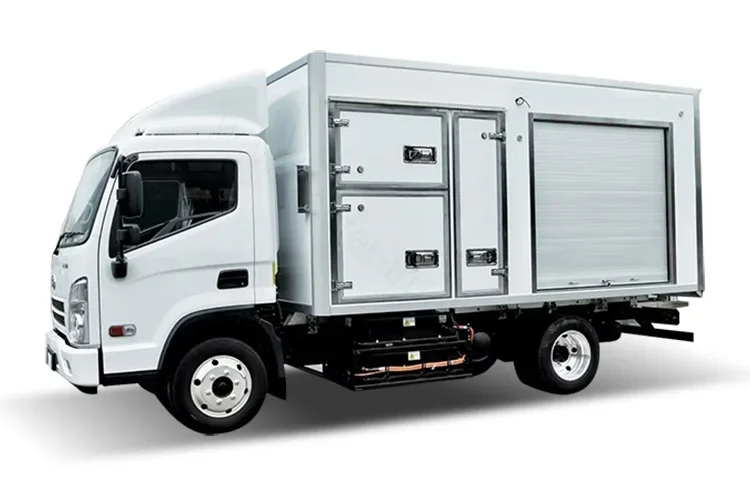
A refrigerated unit is not just another work vehicle. For many lenders, it is a specialty transport asset with extra moving parts: insulated body, cooling system, possible tail-lift, temperature-monitoring gear and a more niche resale profile. That changes how they look at value, structure and LVR.
In Melbourne, these files also get read through the lens of route type and freight pattern. Metro food runs, wholesale produce, event catering, seafood, pharma or multi-drop delivery can all look different. A trucker doing stable depot-to-store cold-chain work often reads cleaner than an operator with vague “general freight” language but a highly customised fridge build.
This is why refrigerated operators should not rely on a generic application path. The cleaner route is a proper cold-chain pack that lines up quote detail, run profile and deal structure before submission. That is also why the Melbourne page above and the broader truck approval guide matter before you commit to a fridge van, rigid or trailer.
| Asset type | What lender focuses on | What usually slows approval |
|---|---|---|
| Fridge van | Business use, body fitout detail, cold-unit brand/spec | Bundled quote with vague body/cooling lines |
| Refrigerated rigid | Payload, route stability, body value, operator experience | Weak contract proof or unclear usage profile |
| Refrigerated trailer | Compatibility, existing truck setup, trailer value and condition | Missing proof on combo structure or add-on valuation |
An owner-driver adding a refrigerated rigid for metro fresh-food work had enough revenue, but the first quote bundled the truck, fridge body and cooling package too loosely. Once the quote was rebuilt line by line and matched to run evidence, the file read cleaner and stopped looking like a specialty-value guess.
2) The cold-chain approval checklist Melbourne owner-drivers should clear before applying
The cleanest refrigerated deal is simple on paper even if the truck is specialised in real life. Lenders want to see what is being purchased, what the operator does, and why the setup matches the work. That means fewer assumptions and fewer hidden line items before Settlement.
If you are still early in the process, use this section alongside Truck Finance Checklist 2025. If the refrigeration build is newer or more specialised, layer in Truck Finance "Day 0" Submission Bundle (2026) before you let a dealer or body builder rush you into a weak submission.
Get a quote that splits vehicle, body and refrigeration equipment clearly
A lender should be able to see the chassis, the insulated body, the cooling unit and any major add-ons separately. If those lines are blurred, the file can trigger re-quotes, valuation questions or a bigger deposit. That is exactly why Truck Finance Quote Checklist (2026) matters here.
Show the cold-chain work, not just “transport”
A transport business saying “we do deliveries” is too vague for a specialised asset. State the freight type, customer profile and run pattern. Chilled food, frozen stock, seafood, pharmaceuticals or catering each tell a stronger story than generic freight language.
Match the asset to the route and weekly load reality
A metro fridge van is different from a refrigerated rigid doing heavier suburban and regional work. The lender wants to see that the asset size matches the contract and your Borrowing Capacity, not that you are stretching into a build that looks oversized for the run.
Prove experience with temperature-controlled work or adjacent runs
An operator who has already handled food, produce, event catering or compliance-heavy dispatch usually reads stronger than someone moving from general work into a full cold-chain setup with no support story. If you are stepping up, document the transition clearly.
Use a structure that fits the asset life and cashflow pattern
Many refrigerated files still settle cleanly under a Chattel Mortgage, but the correct structure depends on the asset mix, deposit position and how you want to manage repayments, tax and a future Balloon Payment. For broader structure context, read Truck Chattel Mortgage in Australia.
A Melbourne operator adding a refrigerated trailer improved the file by replacing a generic quote, attaching customer run evidence and showing how the trailer fit existing work rather than speculative expansion. The deal stopped looking like a cold-room gamble and started looking like a logical fleet extension.
3) The three refrigerated transport traps that usually create delays, deposits or manual review
Most cold-chain files do not fail because the applicant is unviable. They fail because the specialised gear is documented badly. The base vehicle may be financeable, but the attached refrigeration scope can still create friction if the paperwork is loose or the value story is weak.
The fastest way to avoid that is to treat the file like a specialty-body deal from day one. That means using the same discipline you would use for add-ons, compliance costs and custom-value components rather than assuming the lender will “work it out later”.
- Trap 1: the quote hides key components inside one total price, so the lender cannot judge the fridge package cleanly.
- Trap 2: the operator says “general freight” while applying for a highly specific refrigerated setup, so the file looks mismatched.
- Trap 3: the deal ignores existing debt, repayment pressure or looming Residual Balloon exposure, which can squeeze serviceability faster than expected.
If your business is already carrying truck debt, also read Truck Repayments vs Running Costs and Fleet Refinance & Restructure. A cold-chain upgrade can be smart, but not if it is stacked on top of repayments that already eat too much weekly margin.
One operator looked “approved enough” on turnover, but the lender paused because a second older facility and a near-term balloon were not disclosed well. The new refrigerated asset was not the whole problem. The real issue was the combined repayment picture.
4) Fridge van, refrigerated rigid or trailer: which setup usually reads cleanest?
There is no single best refrigerated asset. The best one is the setup that matches the work and can be explained simply. Lenders like logic. They do not like operators jumping into a larger or more specialised build without a contract, route or margin case that supports it.
For smaller metro delivery corridors, a fridge van can read cleanly when the business use is obvious and the body fitout is itemised. A refrigerated rigid often makes sense when the payload and route stability justify it. A refrigerated trailer can work well where the operator already has the right prime setup and the trailer genuinely expands capacity rather than creating a mismatched combo.
If you are still deciding between formats, the closest sibling reads are Prime Movers vs Rigids, Used vs New Truck Finance and Truck Age Rules 2025. Those pages help frame the asset choice before refrigeration-specific costs are layered in.
| Setup | Usually strongest when | Watch-out |
|---|---|---|
| Fridge van | Metro multi-drop, catering, foodservice, lighter payload | Aftermarket conversion lines can be vague |
| Refrigerated rigid | Stable higher-volume chilled/frozen runs | Specialty body value and bigger repayment load |
| Refrigerated trailer | Existing truck setup already in place and trailer adds clear capacity | Need clean proof on combo logic and trailer condition |
Truckers, owner-drivers, transport and logistics businesses adding cold-chain gear usually run into trouble when the file is treated like a normal truck deal. The cleaner path is a proper refrigerated pack: split quote, clear run story, specialty-body logic and a structure that does not blow up cashflow later.
Start with the Truckie Hub, then the Melbourne explainer Melbourne Truck Finance (Low Doc) 2026, the hero post Low Doc Truck Finance 2025, and the supporting pages on quote detail and contract proof before you submit.
FAQs
Quick answers for Melbourne refrigerated transport operators in 2026.
Hubs first. Then the newest reads.
- Business Owners Finance Hub Cashflow facilities + SME pathways
- Tradie Hub Vehicles, tools, civil + low doc packs
- Truckie Hub Owner-driver finance + compliance packs
- Whitecoat Hub Clinics, fitouts + specialist approvals
- Truck Finance Conditional Approval Explained (2026) What “approved subject to conditions” means and how to clear the common hold-ups
- Truck Finance “Day 0” Submission Bundle (2026) The 11 files that get conditional approval without a follow-up
- Truck Valuation Disputes (2026) Why the valuer comes in low and the pre-buy fixes
- Truck Add-Ons Valuation Pack (2026) How to get specialty gear counted so deposits don’t jump
- Transport Compliance Proof Pack (2026) Docs that speed up truck finance
- Transport Contract Proof Pack (2026) Rate confirmations, run history and docket evidence for faster approvals
- Melbourne Owner-Driver Checklist (2026) From ABN setup to first dispatch
- Melbourne Airport Freight Owner-Driver Checklist (2026) The local proof pack for air cargo runs

 Accredited Member
Newest transport guides
Accredited Member
Newest transport guides
Newest in the Truckie Hub
Four fresh reads for truckers, owner-drivers and transport operators — built to reduce lender friction and keep deals moving.
One Doc Home Loans for Transport Operators (2026)
How owner-drivers can approach property lending with one accountant’s letter instead of two years of tax returns.
After Truck Finance Approval: Settlement Delays
The missing post-approval items that can still stop funding after the deal looks approved.
B-Double & Multi-Combination Truck Finance (2026)
Approval rules for heavy combination operators, including compliance, route risk and lender treatment.
Hume Corridor Truck Finance Checklist (2026)
A local proof-pack guide for Campbellfield, Somerton and Craigieburn owner-drivers.
